
Her på Blåvand's blog bringes korte nyheder i dagbogsformat om livet og hændelser på fuglestationen.
-
FORSIDE

- Blog
Just a few locals
onsdag 21. oktober 2026
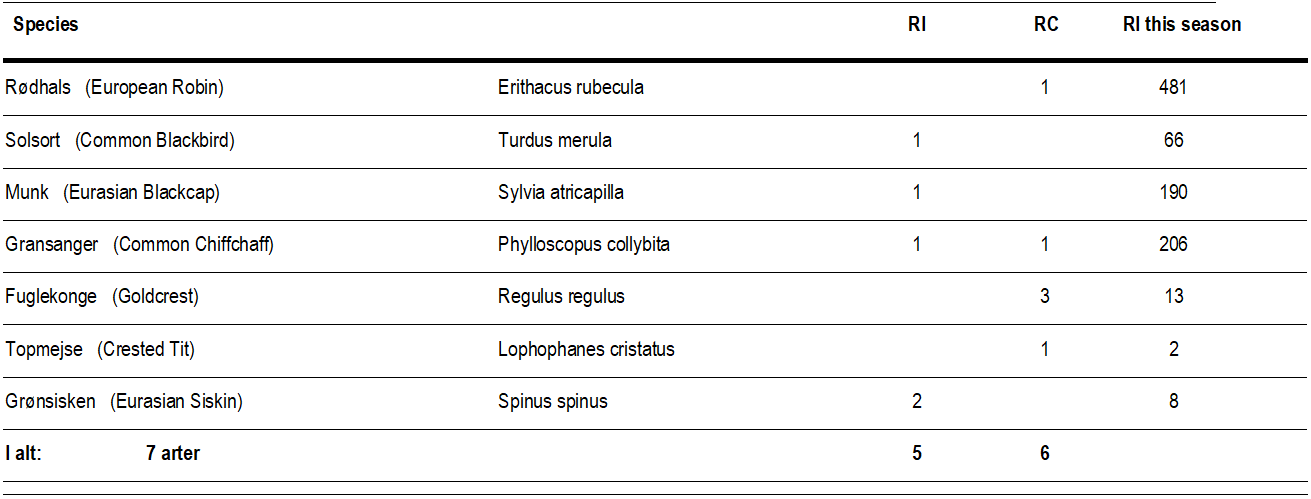
Ringing: Pretty high wind today resulted in not that many birds in the nets. We ended up with 11 birds in total, which exceptionally consisted of more recaptures than new birds.
The local Goldcrests (Fuglekonge) have been revisiting the nets a few times now, as well as our local Crested Tit (Topmejse). Both species we would actually really like to get more newly ringed of, especially the Goldcrests are caught in dramatically lower numbers than usual.
Today's numbers:
Observation: Today was quite similar (too similar, if you ask me) to yesterday. Luckily, unlike yesterday, I (Anton) was joined by David, which helped greatly with my enjoyment of the obs. The wind was still from the east, and very few birds were in the air. The most notable ones were the geese and ducks - of these, the most interesting ones were the 108 Wigeons (Pibeand), 14 Greater White-fronted Geese (Blisgås), the 12 Pintails (Spidsand), and the 4 Tufted Ducks (Troldand). A single Mallard also joined us at obs, which is a species I have not seen a lot of the last month or so out here.
Other than the ducks, most numbers were low. Even the usual suspects were few, with only 279 Common Scoters (Sortand), 19 Red-throated Loons (Rødstrubet lom), and no migrating Meadow Pipits (Engpiber) or Chaffinches/Bramblings (Bogfinke/Kvækerfinke).
Hopefully tomorrow will be more exciting…
At the Station: Mathilde Sif Eiby, Anton Ræbild Jensen, Johan Them Steffensen, Storm Hauris Borum, Helena
Goodbye Strummer
tirsdag 20. oktober 2026
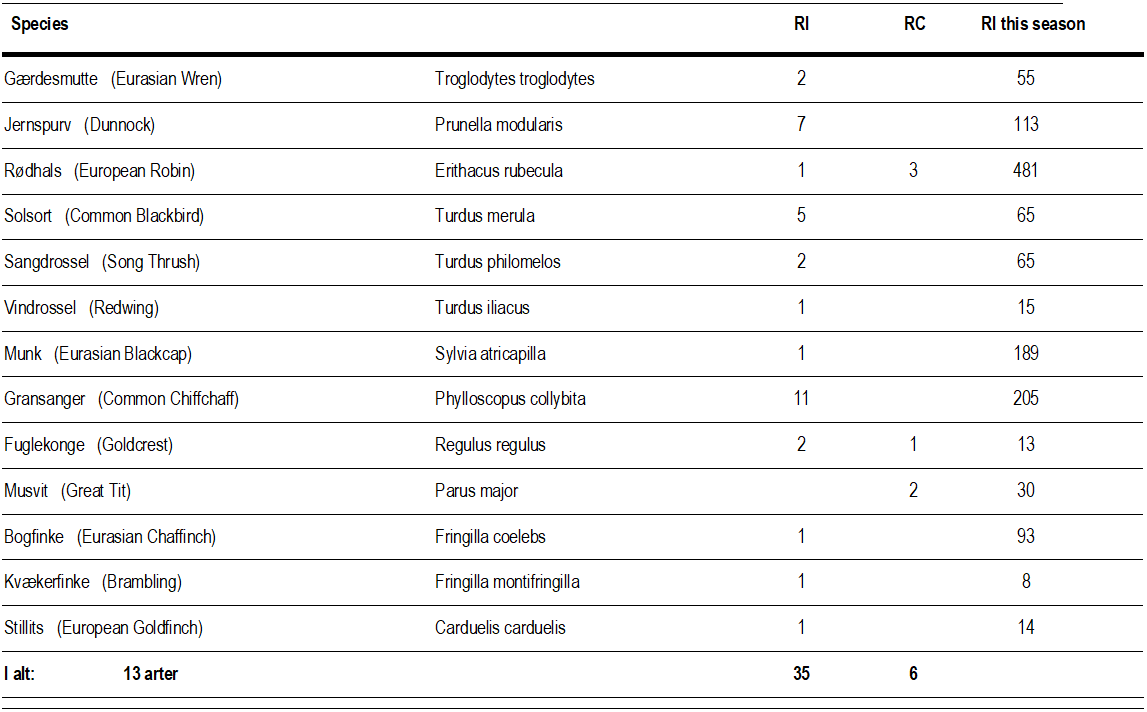
Ringing: Today we had 41 birds of 13 species. The Chiffchaffs (Gransanger) were suddenly back to being our most numerous bird, and we even had one of the biggest I've ever seen - 67mm wing and 9,1g weight! It was an adult as well (not born this year), with the broadest tail and best feather structure I've ever seen on a Chiffchaff too.
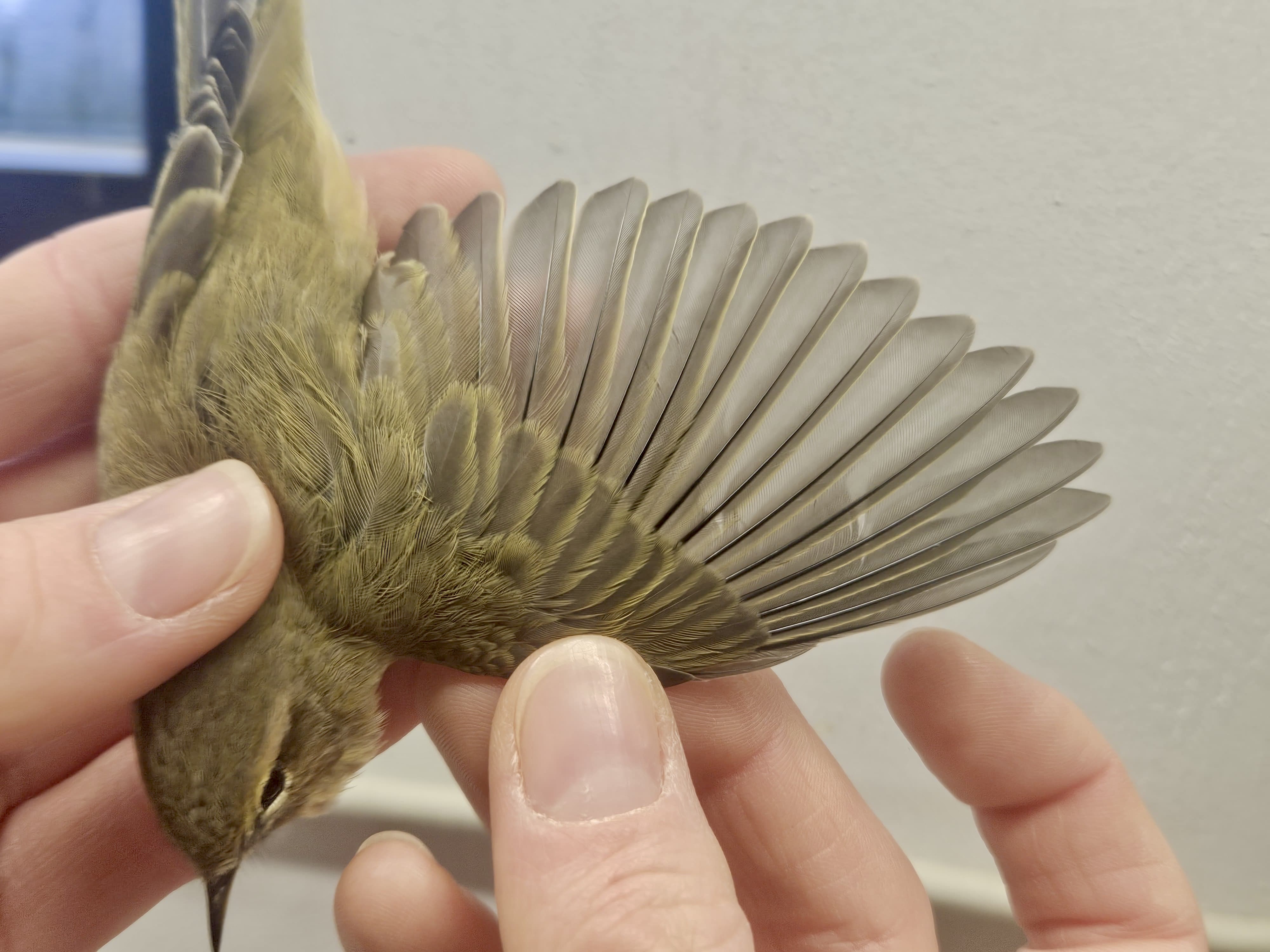
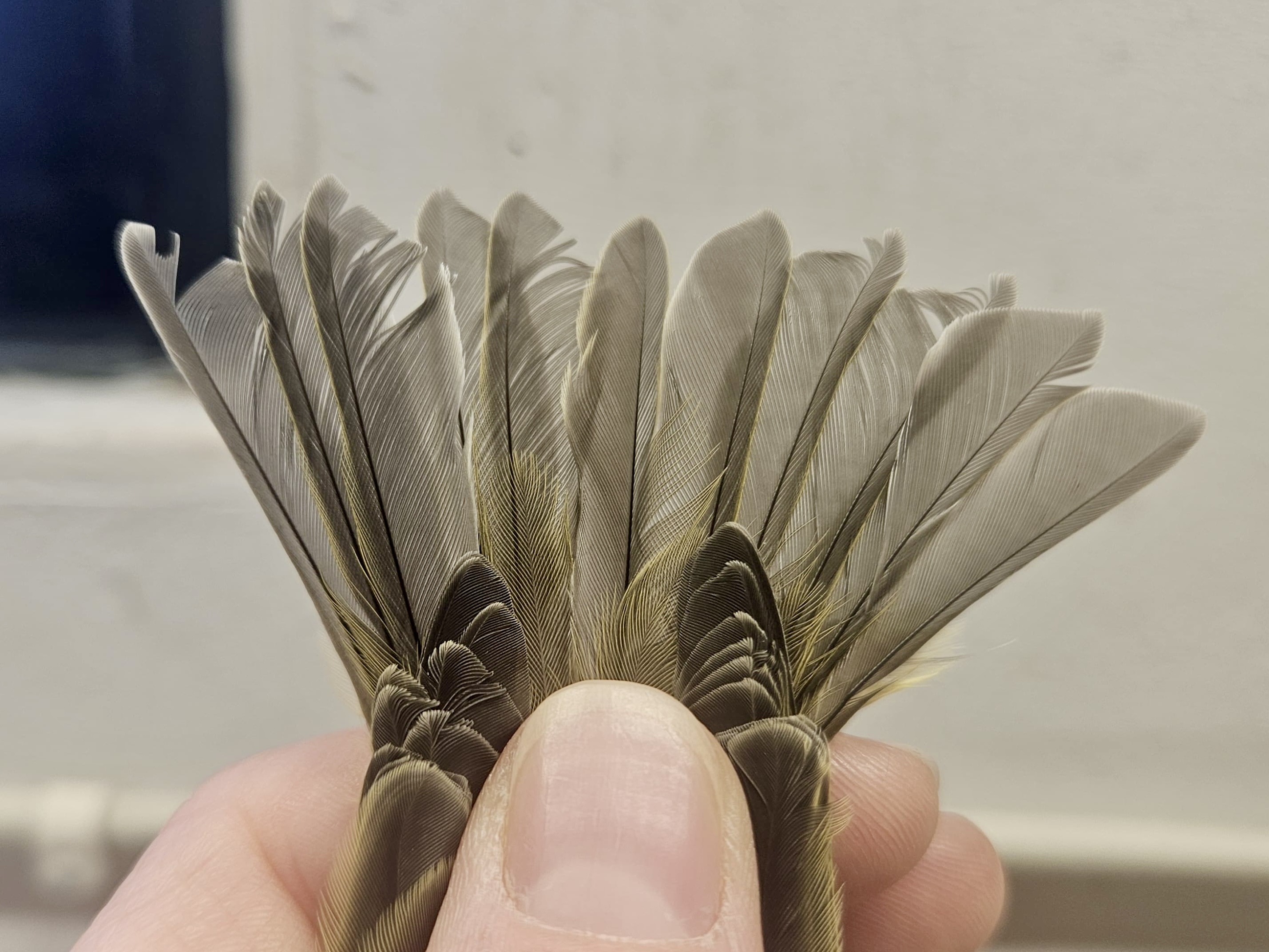 To the unexperienced eye, this might look like a regular old Chiffchaff, but this was a NICE bird. Pictures by Storm Hauris Borum.
We also had a good amount of thrushes again, five of which were Blackbirds (Solsort), and they were really showing off their wide variation today.
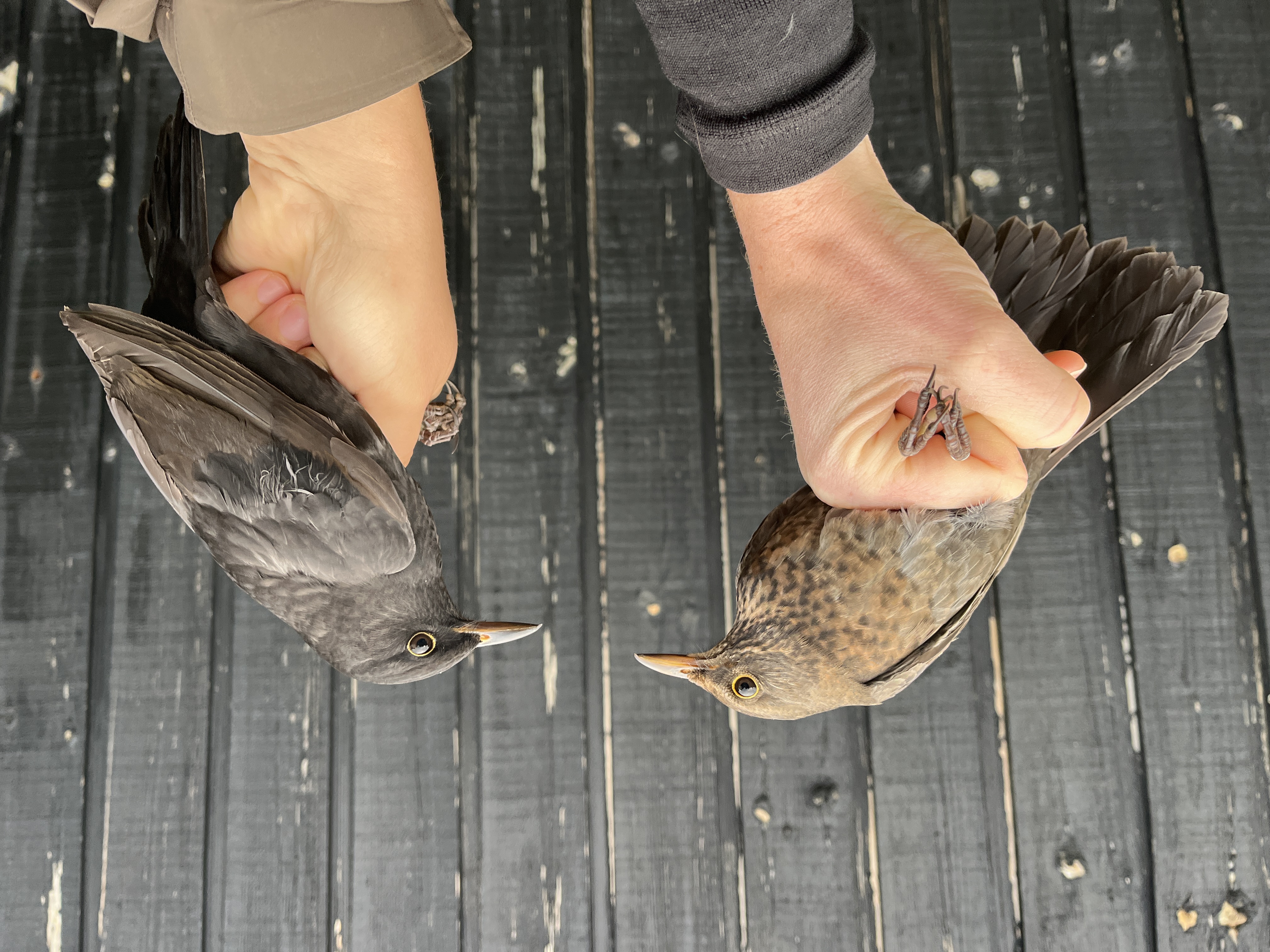
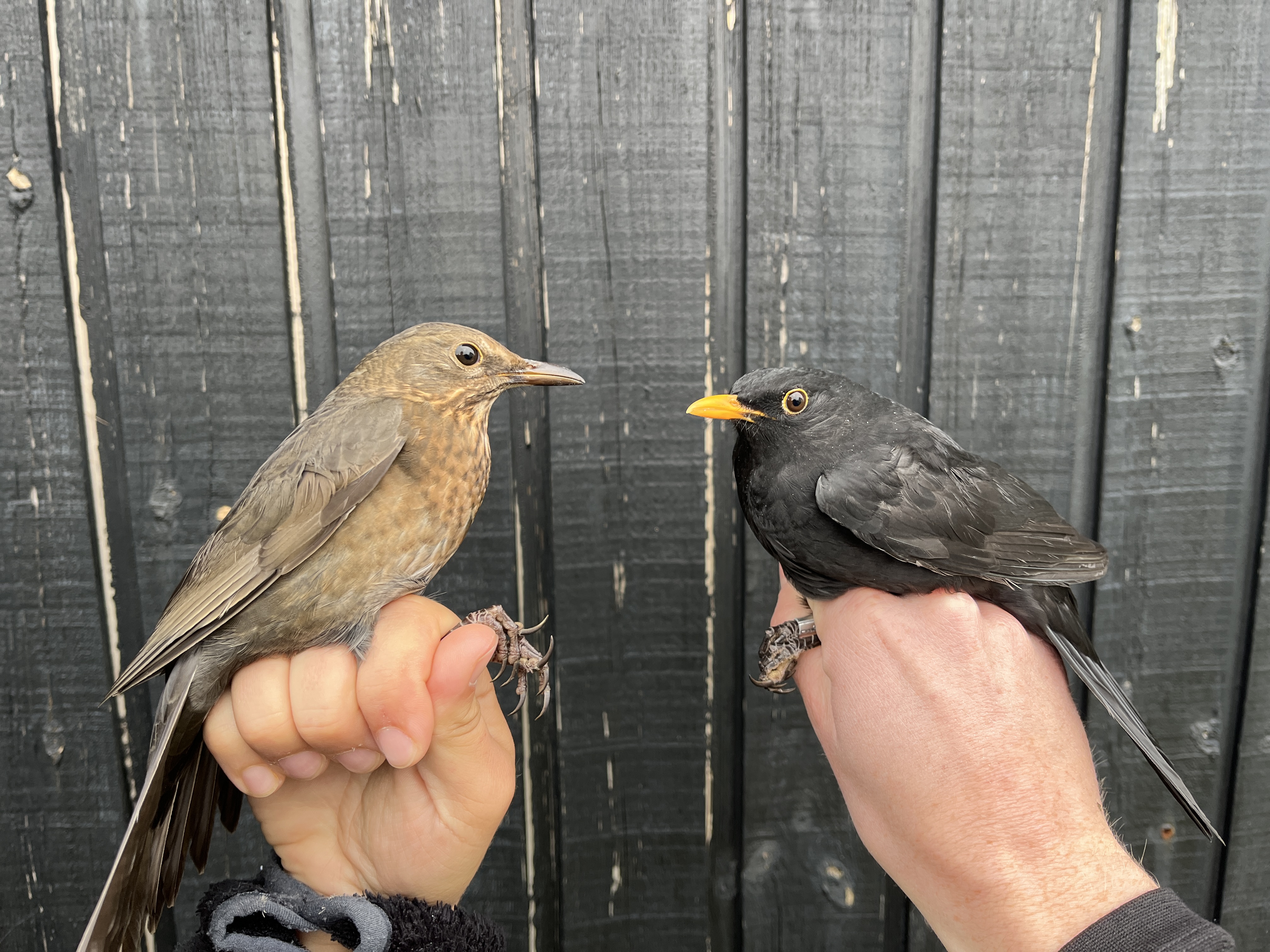 On the left both young females, the bottom one the palest Storm and I had ever seen. On the right both males, the top one born this year, aged on the brown feathers (old baby feathers) contrasting to the black ones (new teenage feathers) and the dark bill, while the bottom one is a clear adult bird (born a previous year), with a pure black plumage and yellow bill. Pictures by Mathilde Sif Eiby.
Today's numbers:
Observation: Today was an extremely uneventful day at obs, with no notable species to speak of. The only exceptions to this were the female Hen Harrier (Blå Kærhøg) that flew out from the Huk around the very start of obs, as well as the 6 resting Horned Larks (Bjerglærker).
As for the numbers, there is really not much to speak of either, with few (27) Red-throated Loons (Rødstrubet Lom), 367 Common Scoters (Sortand), 190 Starlings (Stær), and 55 Common Eiders (Ederfugl).
Other things: Today was also unfortunately Strummers last day at Blåvand Fuglestation before their visa would expire. They will be sorely missed, both at the nets ringing Nutcrackers (Nøddekrige), but also in the living room watching South Park and Paddington 2 on repeat. All the volunteers at the station look forward to hopefully seeing them again in the near future.
At the Station: Strummer Edwards, Mathilde Sif Eiby, Anton Ræbild Jensen, Johan Them Steffensen, Storm Hauris Borum, Helena
What a tease!
mandag 19. oktober 2026
Ringing: Another beautiful morning at the west coast, with gardens a bit too quiet besides the occasional thrush, but the Jackdaws (Allike) were still filling up the sky.
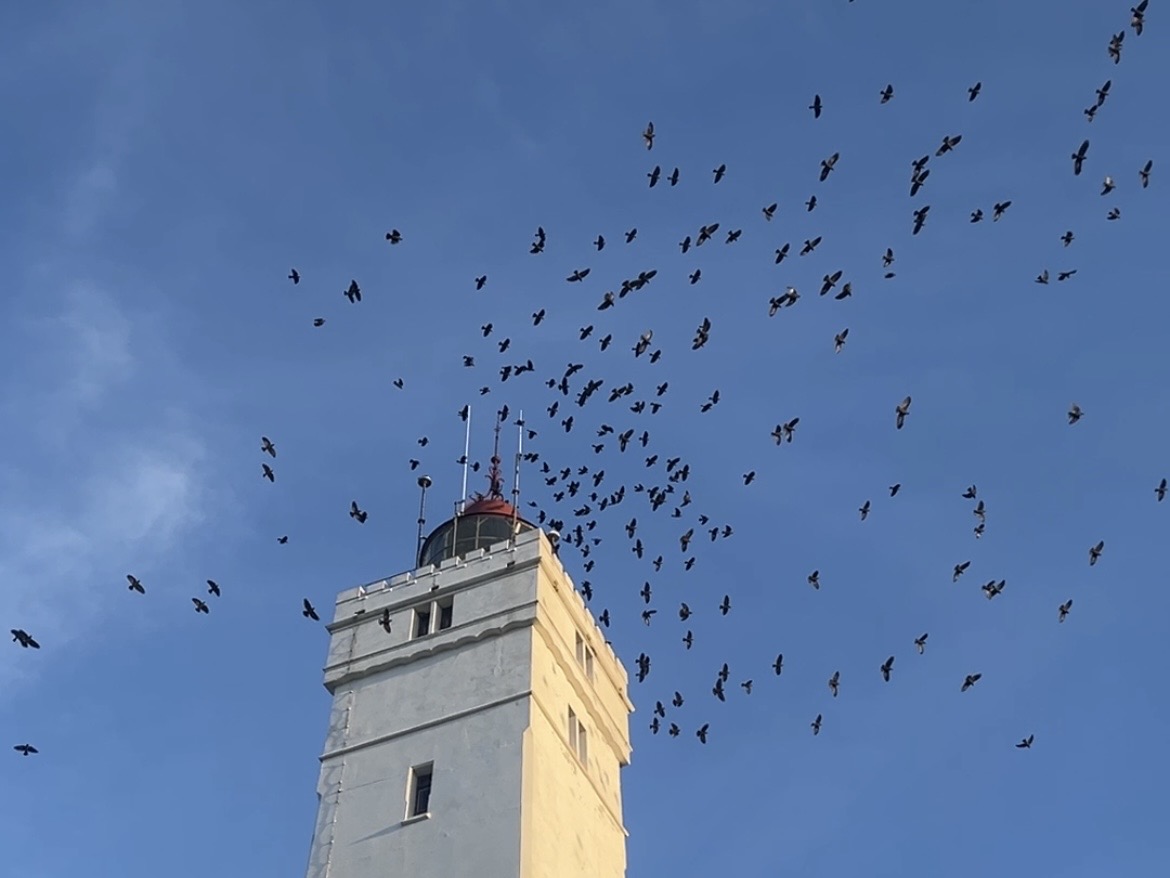 Jackdaws circling the lighthouse. Picture by Mathilde Sif Eiby.
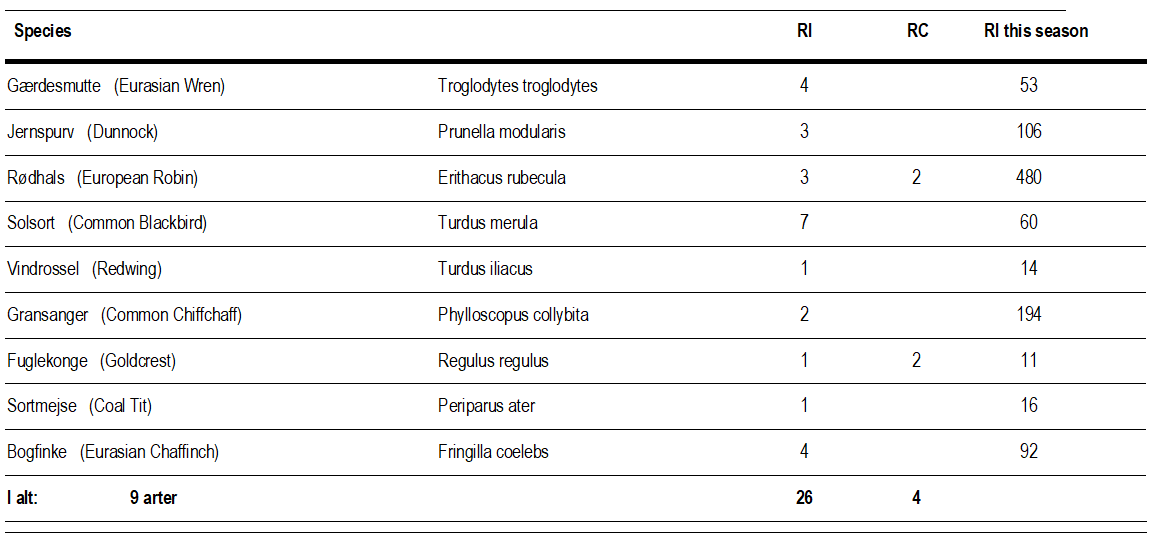
With the low volume day, we could introduce our new guest Helena, who's gonna be here for some weeks, to some ringing too. Our most numerous bird in the nets today was the Blackbird (Solsort), with 7 out of 30 individuals.
Just before closing, Storm and I were checking our non-standard nets, when Storm heard a Nutcracker (Nøddekrige) respond to our mixtape! I found it right after just chilling on a branch SO close to the nets and preening its feathers without a care for us. Despite our best efforts, it eventually flew off without visiting any nets though. It could have been our FOURTH ringed Nutcracker, and my first own ringed... crossing my fingers for the next few days!
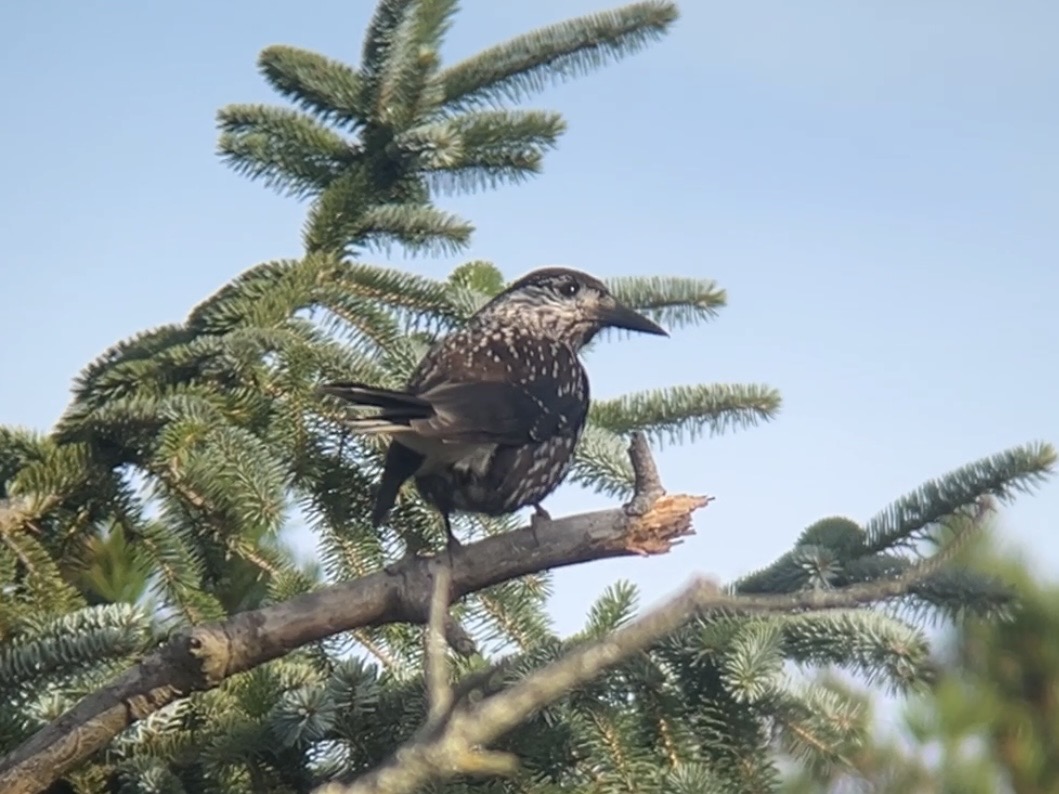 The Nutcracker teasing us today. Picture by Mathilde Sif Eiby.
Today's numbers:
Observation: Today was another beautiful but also cold day, with clear skies and a mild wind from the east. This is apparently also the perfect recipe for corvids, as today was another record-setting obs for a corvid species - this time Rooks (Råge)! With a mind-blowing 518 individuals in the sky, we at least matched the number from yesterday, and also probably beat it. Today also brought plenty of Jackdaws (Alliker), with over 4100 individuals flying by. The Starlings (Stær) were also, like yesterday, plenty - a nice 2060 birds visited us at obs.
What wasn’t like yesterday were the thrushes. With no Fieldfares (Sjagger), 1 Mistle Thrush (Misteldrossel), no noticeable migrating Blackbirds (Solsort), and only 240 Songthrushes/Redwings (Sangdrossel/Vindrossel), I wasn’t impressed. There were, however, a decent number of Chaffinches/Bramblings (Bogfinker/Kvækerfinker) at 880, which was a nice change.
We were also lucky enough to see 2 Hen Harriers (Blå Kærhøg) fly by, as well as 3 (at once) Nutcrackers (Nøddekriger). Overall, a pretty decent day, I’d say.
Other things: Later in the day a Pallas' Leaf Warbler (Fuglekongesanger) was spotted nearby, which we of course had to go see, and for Strummer's last evening, we went to the top of the lighthouse before dinner. From the top we even spotted a Polecat (Ilder) or Marten (Mår) running along one of our closed nets.
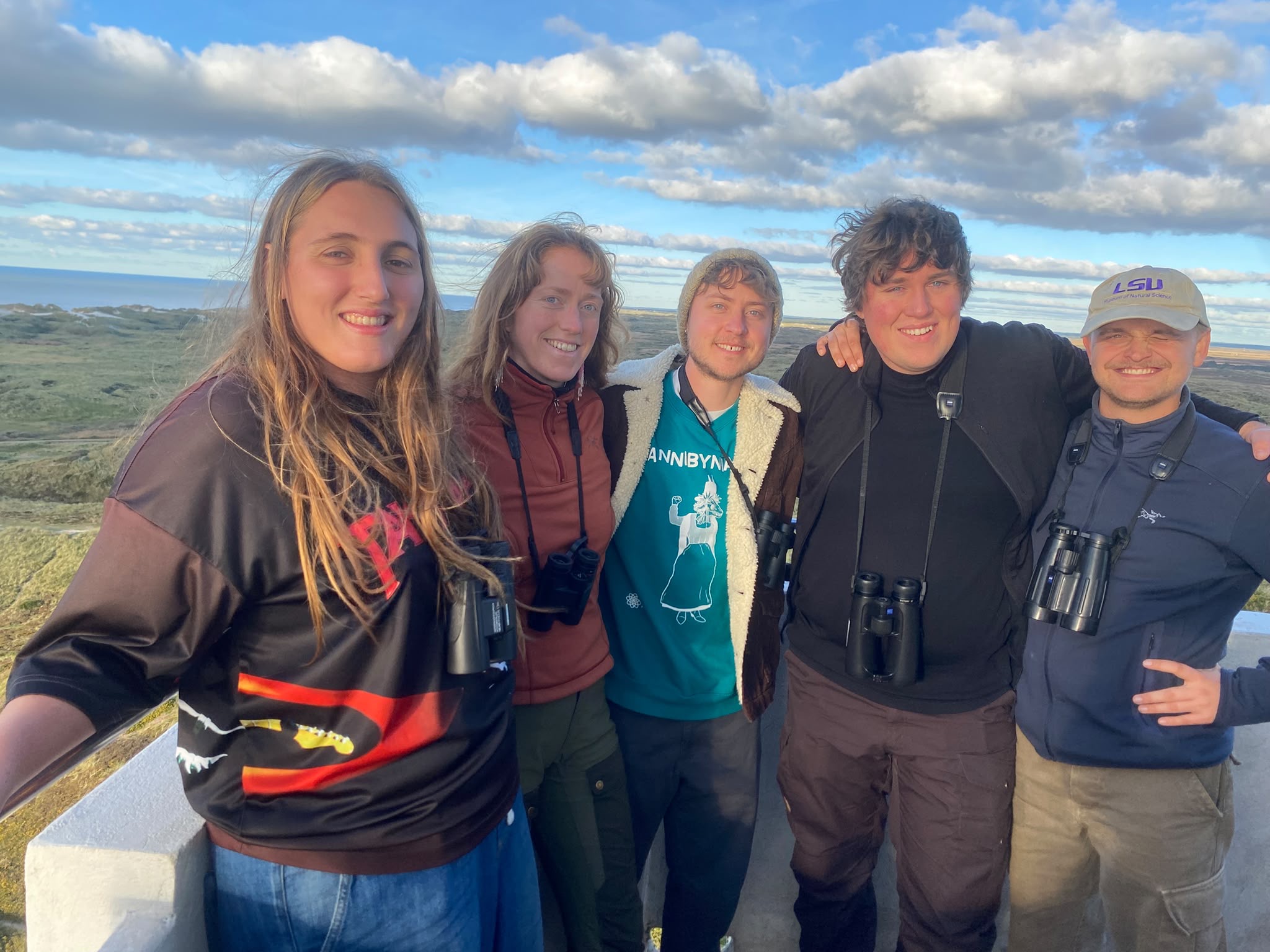 The October gang. Picture by german tourist.
At the station: Strummer Edwards, Mathilde Sif Eiby, Anton Ræbild Jensen, Johan Them Steffensen, Storm Hauris Borum, Helena
Corvid and thrush Mecca
søndag 18. oktober 2026
Ringing: Strummer, Johan and Storm were ringing today, but didn't mention anything exciting, besides 20 (TWENTY!) Blackbirds (Solsort) - I'm guessing one of our highest numbers of Blackbirds in a day ever?! That meant 28 thrushes in total out of 47 birds... I'd say that's a pretty good day.
Today's numbers:
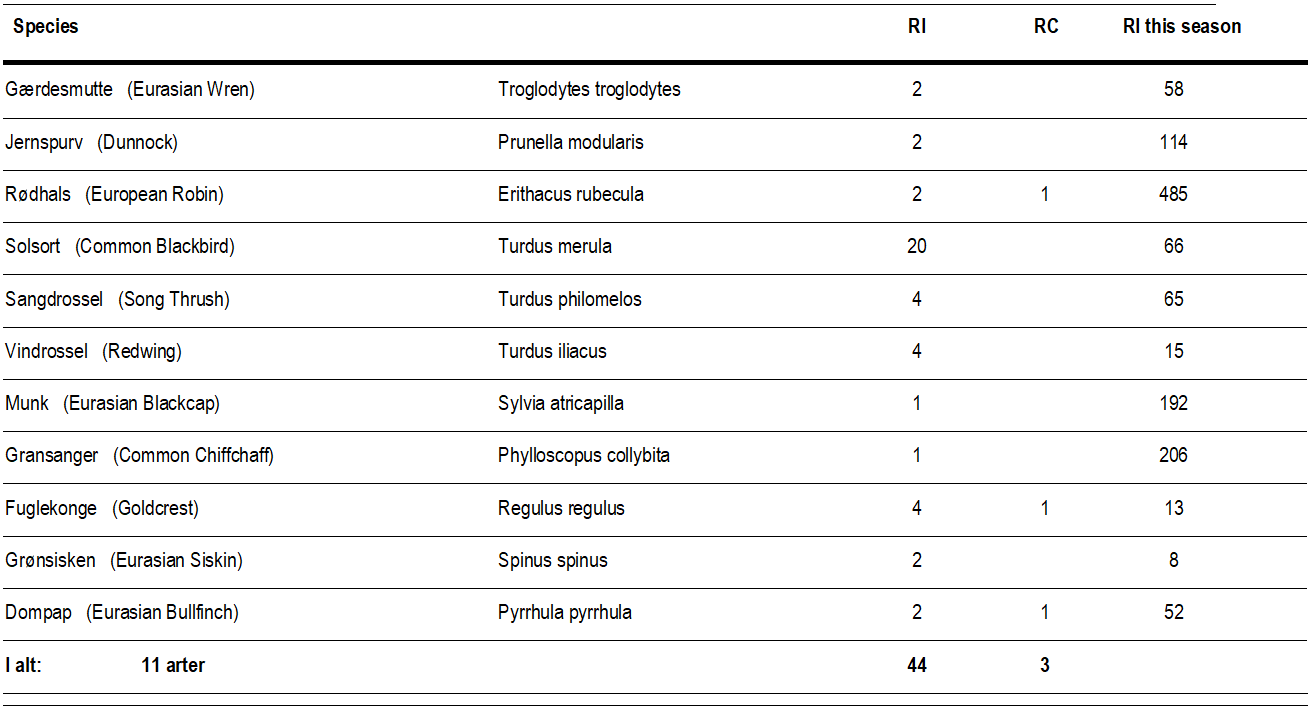
Observation: My (Mathilde's) first day back at the station after a week at DOF UNG camp! I went for my potentially last obs of the season (depending on the weather), since I'll be taking Strummer's place as head ringer, when they sadly have to leave on Tuesday.
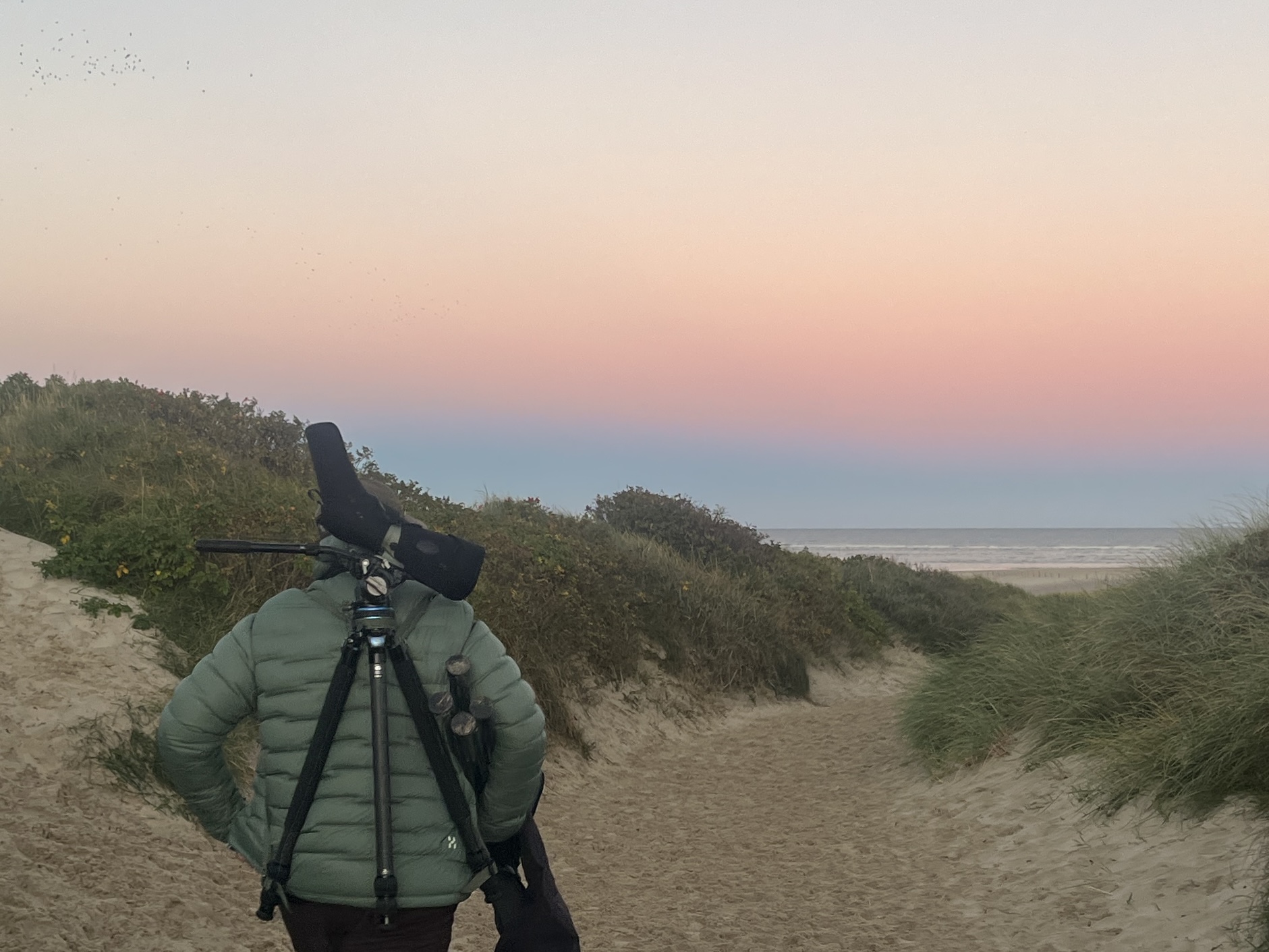 A nice walk to the observation post - corvids already fill the sky. Picture by Mathilde Sif Eiby.
Today we had striking numbers of corvids, and especially giant flocks of Jackdaws (Allike), totalling in 1970 definite individuals and 2710 mixed individuals of corvids, with an estimate of 80% of them being Jackdaws too. With this estimate it results in the highest number of Jackdaws ever counted during the standard at Blåvands Huk, with the previous record being 2881 individuals October 15th 1997. The rest of the corvids were mostly Rooks (Råge), approximately 500 individuals, which means we probably broke the record for Rooks as well, with the previous record being 345 individuals October 3rd 2024.
 So many Jackdaws flew right above our heads today. Picture by Mathilde Sif Eiby.
We also had a great amount of thrushes, with a mix of 2890 Redwings (Vindrossel) and Songthrushes (Sangdrossel) migrating south, being the second highest number ever counted here, only surpassed by an amazing observation of 4655 individuals October 12th 1977.
Other than that we had a good amount of Blackbirds (Solsort), our first Waxwing (Silkehale) of the season and a super nice Great Egret (Sølvhejre) flying right above our heads.
As the tide kept falling, in the last hour a White-tailed Eagle (Havørn) went to rest close by four adorable Harbor Seals (Spættet Sæl) out on the furthest visible shoal.
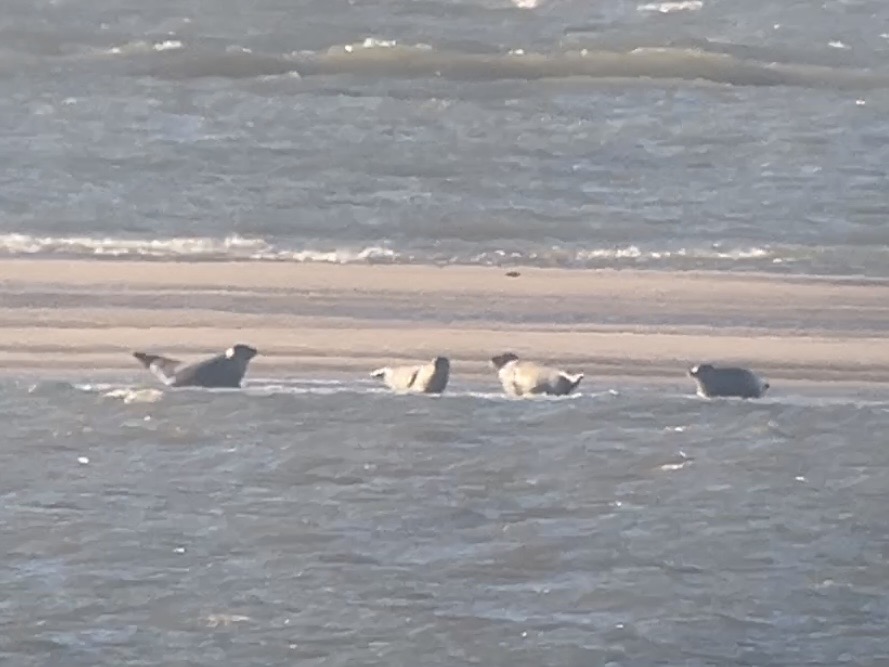 Four Harbor Seals enjoying the sun. Picture by Mathilde Sif Eiby.
At the station: Strummer Edwards, Mathilde Sif Eiby, Anton Ræbild Jensen, Johan Them Steffensen, Storm Hauris Borum
What's better than two ringed Nutcrackers?
lørdag 17. oktober 2026
Observations:
A calm day despite there actually being birds. Today was the first day in a week where we didn’t host any birders out with us on obs. While missing company and relishing in the silence the Huk can provide, we had some cool birds. We had crossing Horned Larks, a Stock dove showing off for the observation team, and the usual shows of Rooks and Jackdaws that have been seen in the area these last days. The highlight of the day was multiple Northern Nutcrackers trying for some migration. The actual number might be up for debate, but counting all seen on the Huk today totaled 7! One was even seen flying right over to our non-standardized nets and resting, but I’ll let the ringers explain how that turned out.
Ringing:
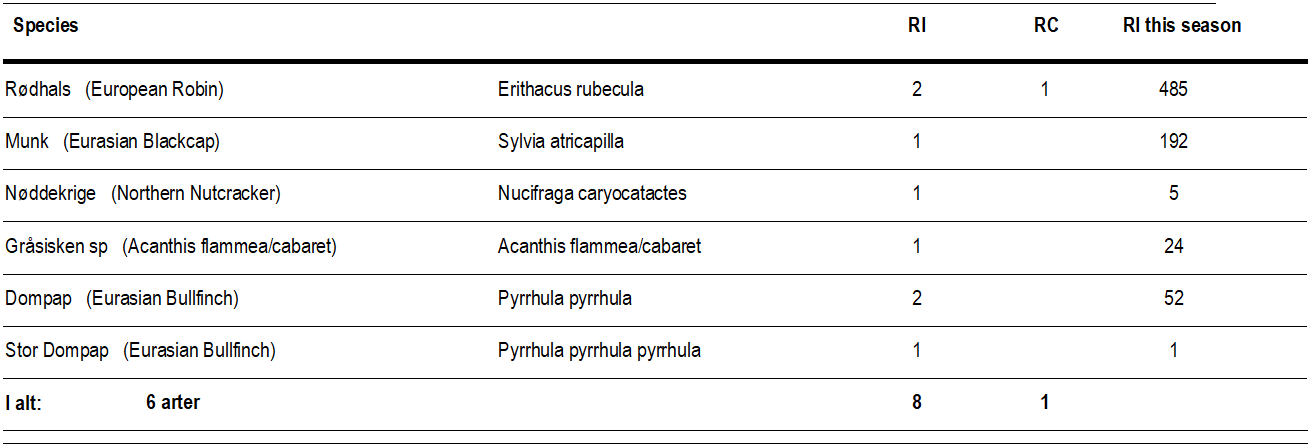
The ringing team only had 9 birds in the nets today, but two were something special! One of them was the significantly larger subspecies of our regular Bullfinch (Dompap) - Pyrrhula Pyrrhula Pyrrhula. The other interesting bird was the station's third ever Nutcracker (Nøddekrige), that Storm got to ring!
Today's numbers:
At the station: Strummer Edwards, Anton Ræbild Jensen, Johan Them Steffensen, Storm Hauris Borum
What's better than 1 nutcracker on the roof? 2 NUTCRACKERS IN THE HAND
fredag 16. oktober 2026
Ringing:
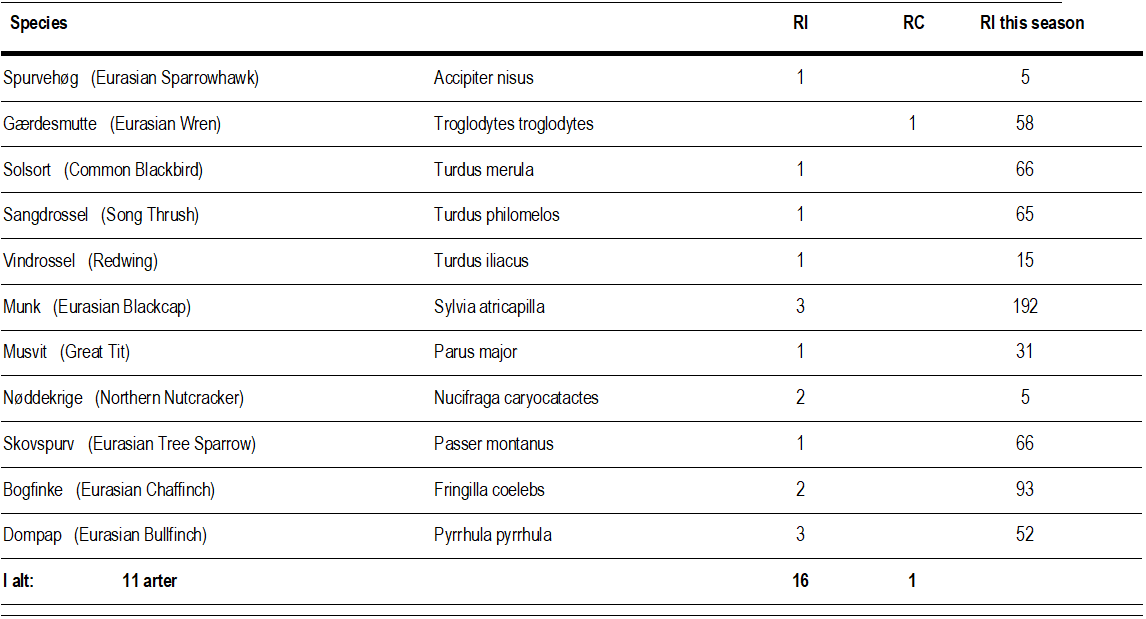
It finally happened. After 40 years of ringing at Blåvand Bird Observatory, we finally got our first nutcracker (Nucifraga caryocatactes). Two, in fact! Through a combined effort of Anton's audio lure and Strummer's dedication to spending hours at the net waiting, Blåvand history was made. This came both the end of the DOF Felttræf and during the final days of Strummer's time at the station, so spirits were high after a not too exciting field season. The nutcrackers were extracted by Strummer and Thomas and ringed by Strummer and Johan.
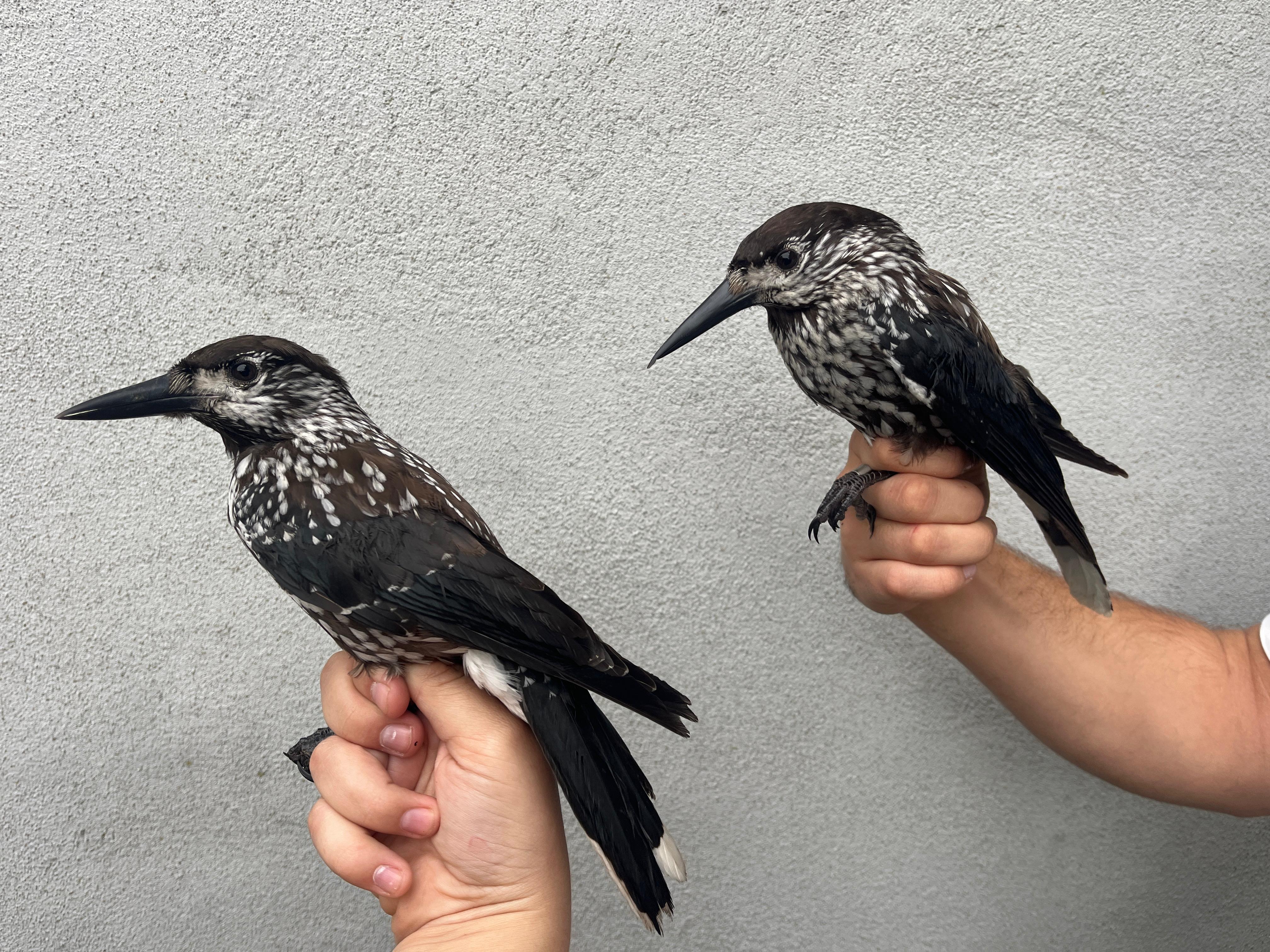
Double nutcracker day! Only a few individuals show up in this area this year, and this is the first time they have been ringed at Blåvand Bird Observatory.
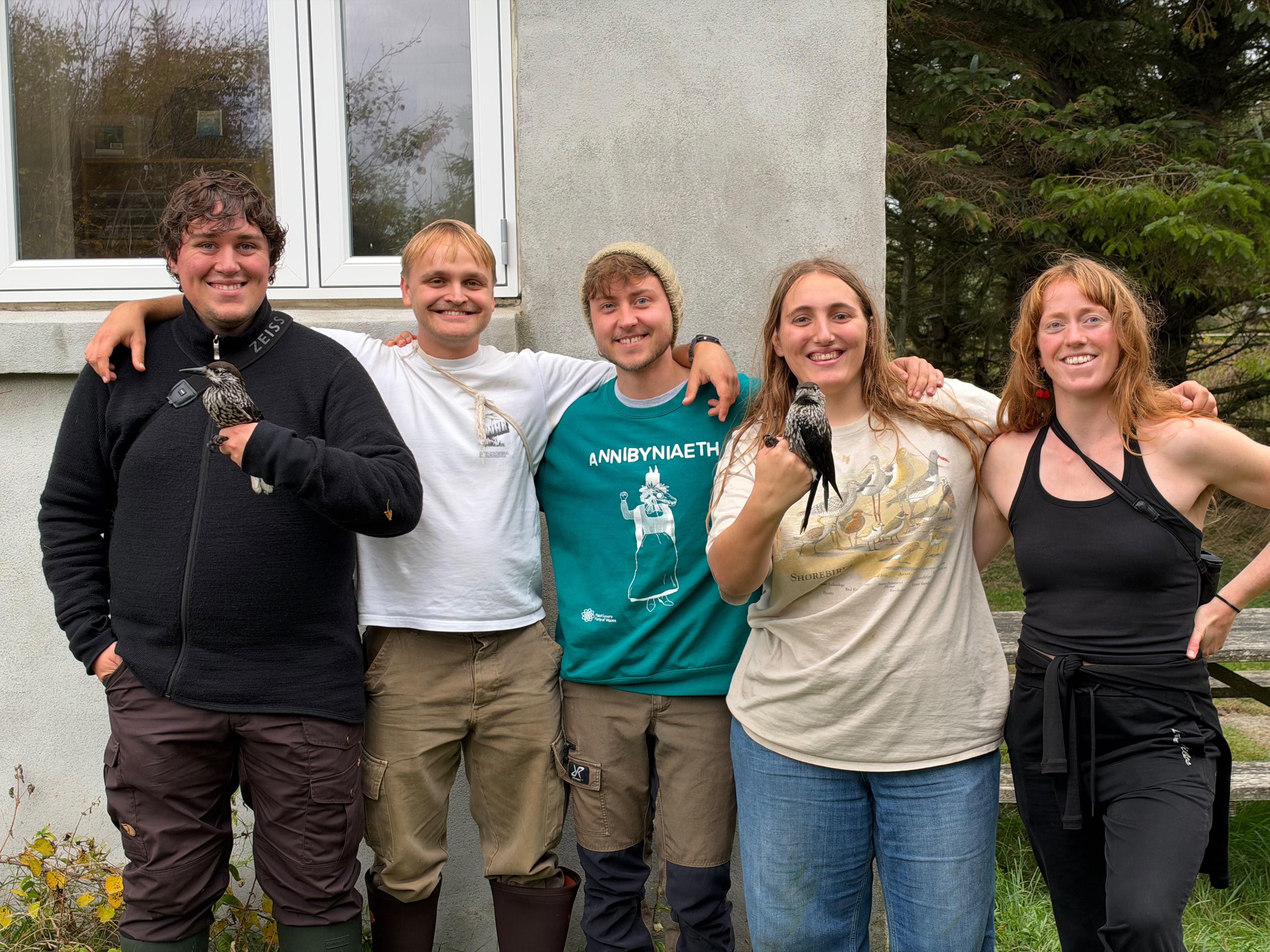
The Blåvand volunteer team: Anton, Johan, Storm, Strummer, Mathilde
The birds attracted a crowd as around 45 people showed up to see them and take pictures. It was a great end to the DOF Felttræf and the first time the bird was seen in the hand for many.
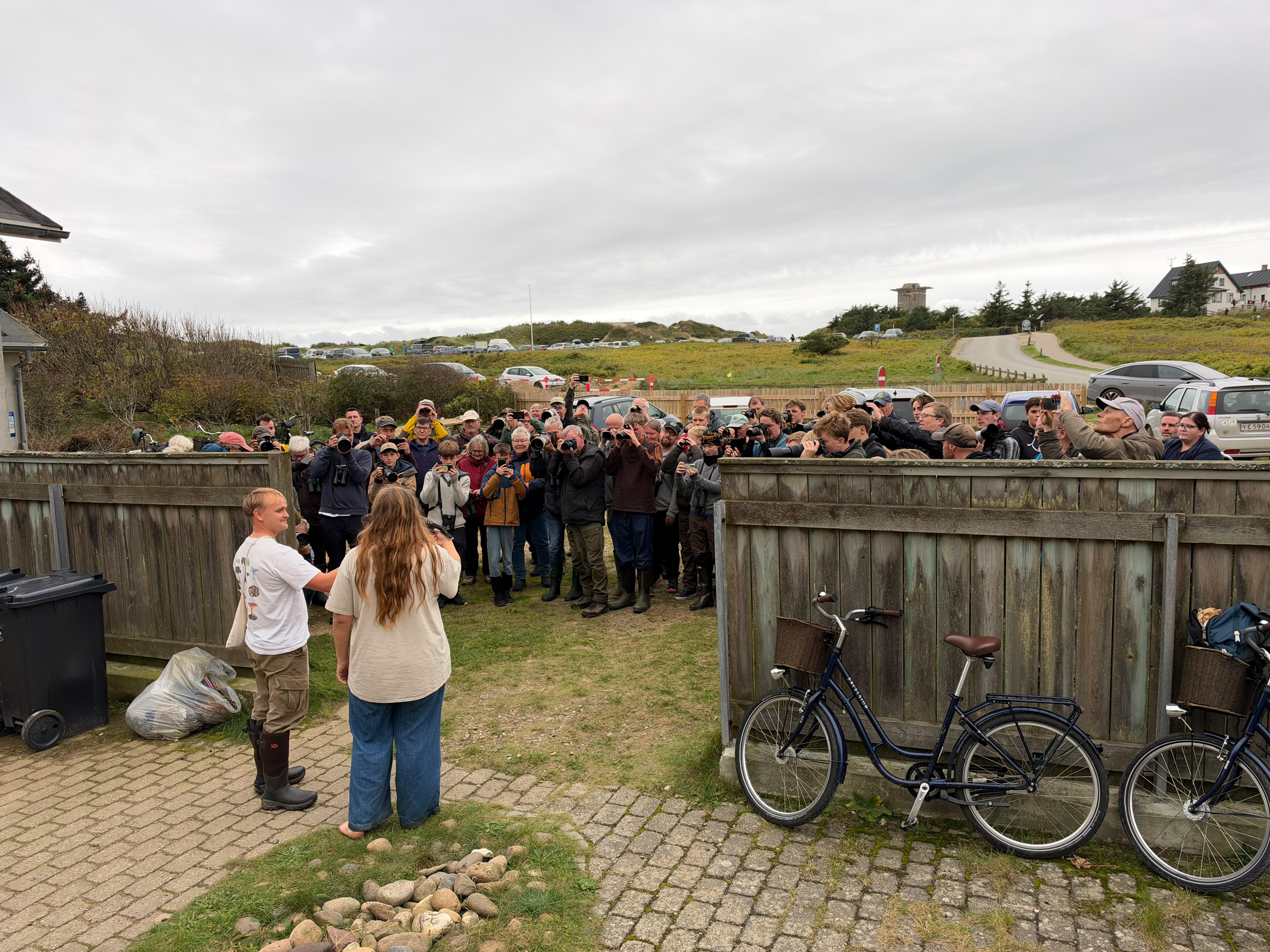
A crowd of DOF and DOF Ung birdwatchers show up to see a nutcracker in the hand.
Apart from the nutcrackers, the ringing went relatively quiet, apart from Johan getting to ring his first sparrowhawk.
Today's numbers:
Observations:
The obs today was certainly not an obs of all time, to say the least. The wind was blowing mostly from the south, which can be not terrible, but at 9-10 meters per second, it was simply a wind of no birds.
This is clearly reflected in the numbers today, with only 5 Grey Wagtails (Motacilla cinerea), 68 Chaffinches (Fringilla coelebs), 50 Meadow Pipits (Anthus pratensis), 253 Common Scoters (Melanitta nigra), and just about Red-throated Loons (Gavia stellata). The only real notable highlight at obs today was a single Richard’s Pipit (Anthus richardi), only giving off a couple of calls before disappearing into the marsh northeast of obs. Now, a Richard’s Pipit is of course never a species to scoff at, but the quality of the obs wasn’t mind-blowing
All in all, a quite boring day at obs - hopefully the coming week can bring some more interesting winds, and with it, some more interesting birds to obs.
At the station: Strummer Edwards, Anton Ræbild Jensen, Johan Them Steffensen, Storm Hauris Borum
Our fourth Brow
torsdag 15. oktober 2026
Ringing: A pretty nice day today for ringing despite the wind and low numbers. I (Storm) got to ring my first yellow-browed warbler (Phylloscopus inornatus) and saw my first crested tit (Lophophanes cristatus) in the hand. Both were shown to a small crowd of DOF birdwatchers who were also excited about seeing these species up close.
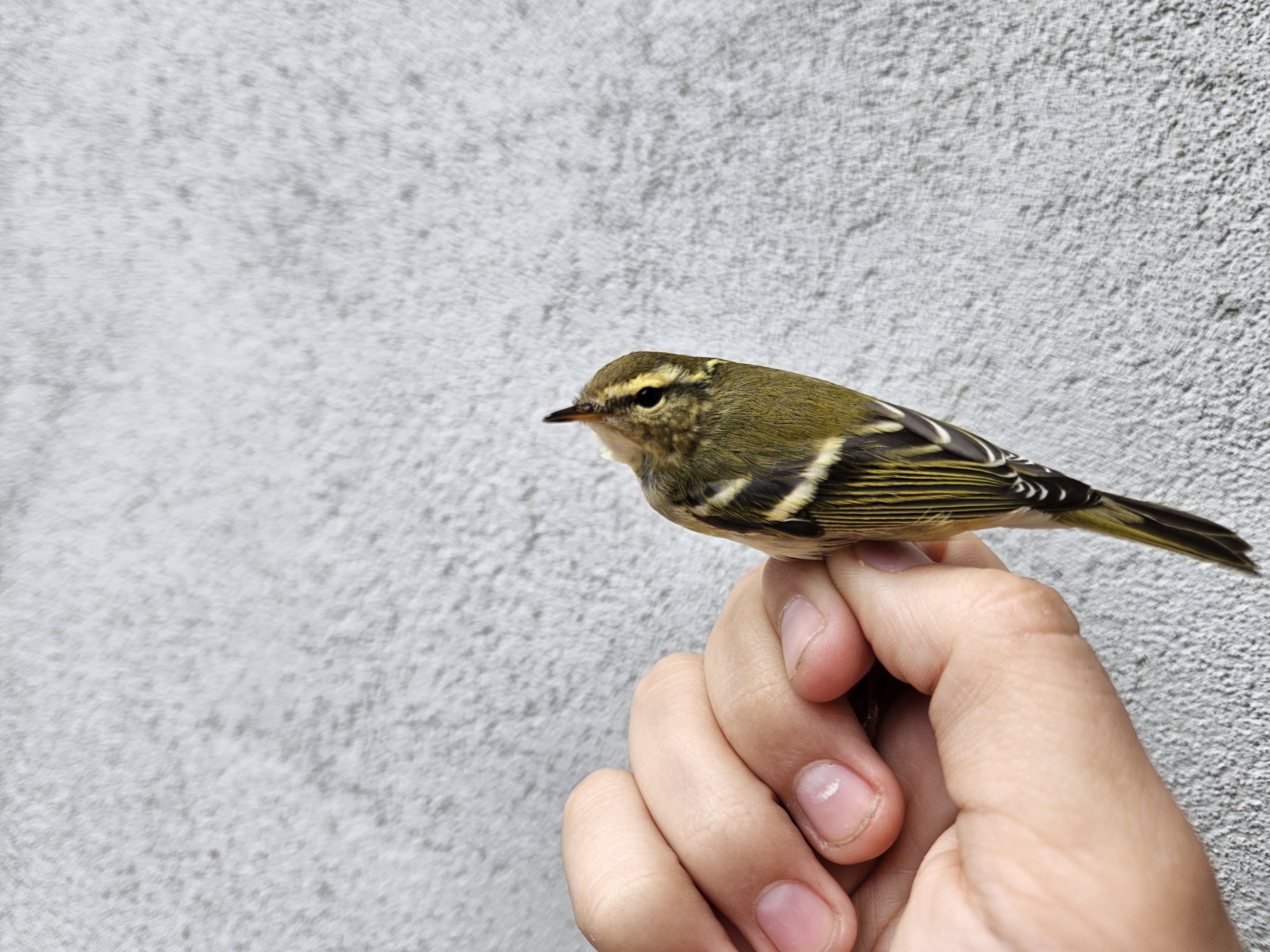
Yellow-browed warbler. A rare visitor, but usually a few are seen and caught in Blåvand. This was the 4th bird ringed here this season.
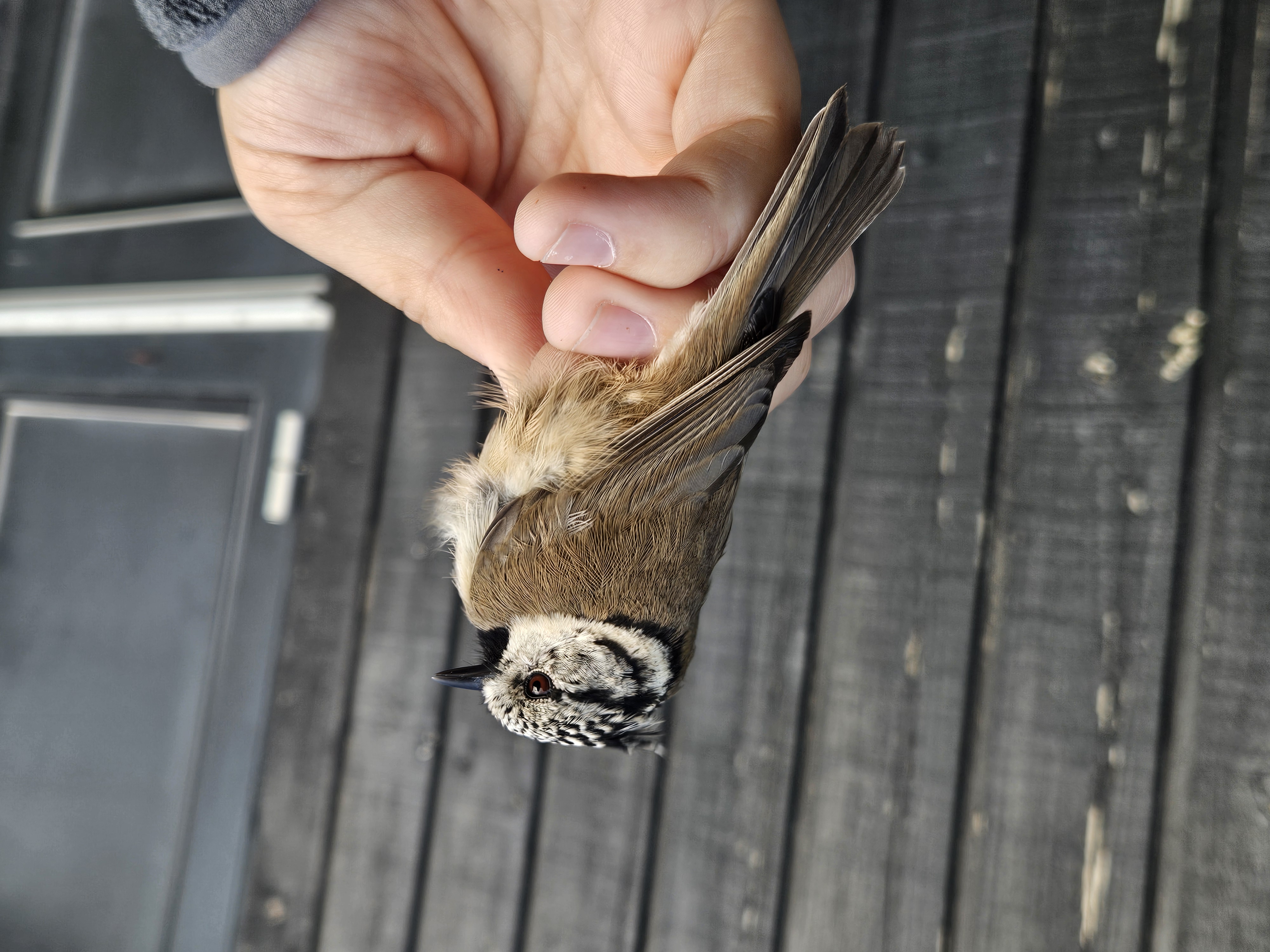
The crested tit is only found in Jylland and on Fyn, and was therefore a hit with birdwatchers from elsewhere in the country, that don't get the chance to see them up close as often.
We also caught two goldcrests, a male and a female at the same time, giving us a great chance to compare the sexes. The way to distinguish them is by the 'crown': males have deep orange feather bases under the yellow in their crown stripe, while females have complete yellow.
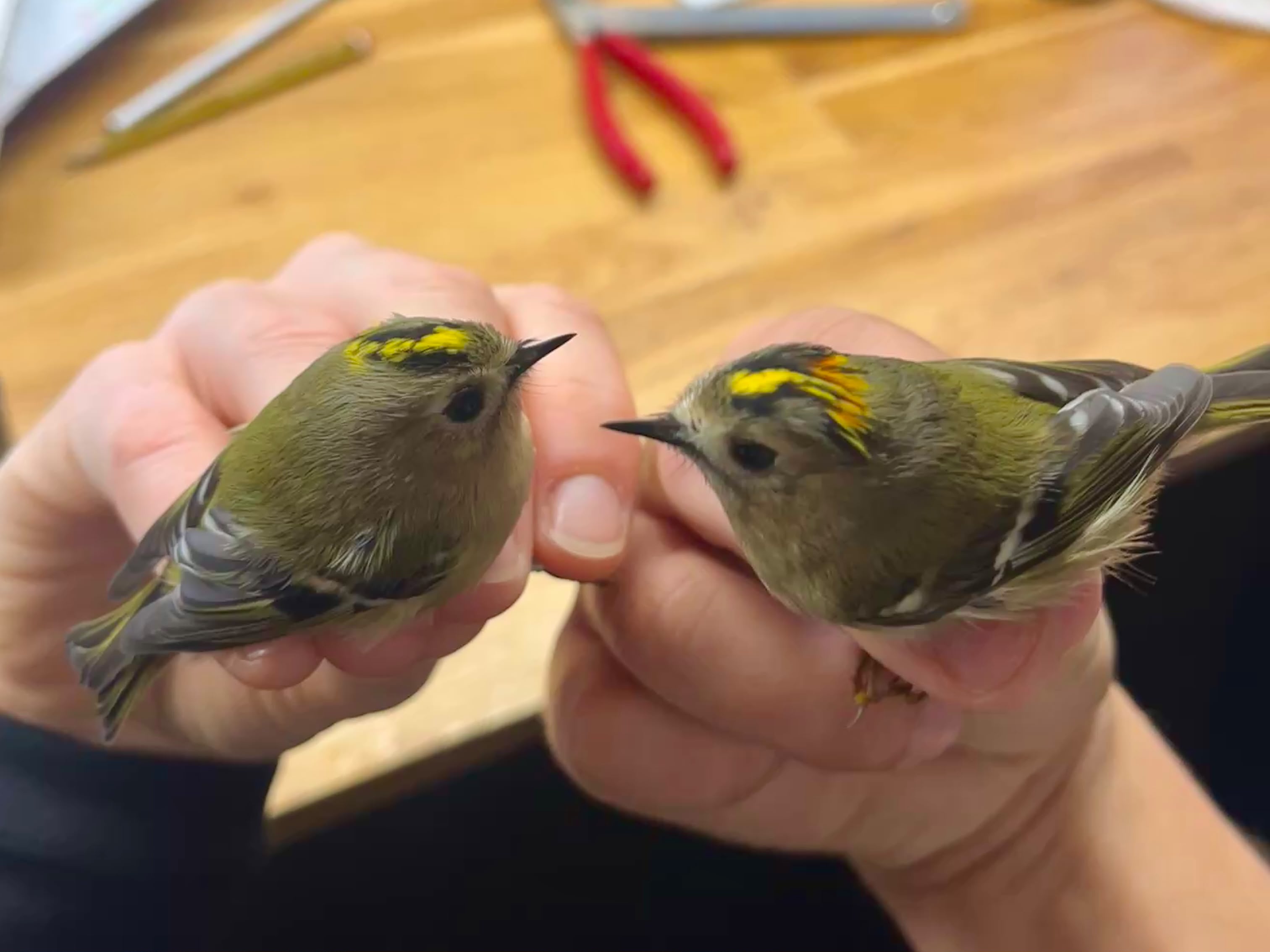
Comparison of female (left) and male (right) goldcrests
Today's numbers:
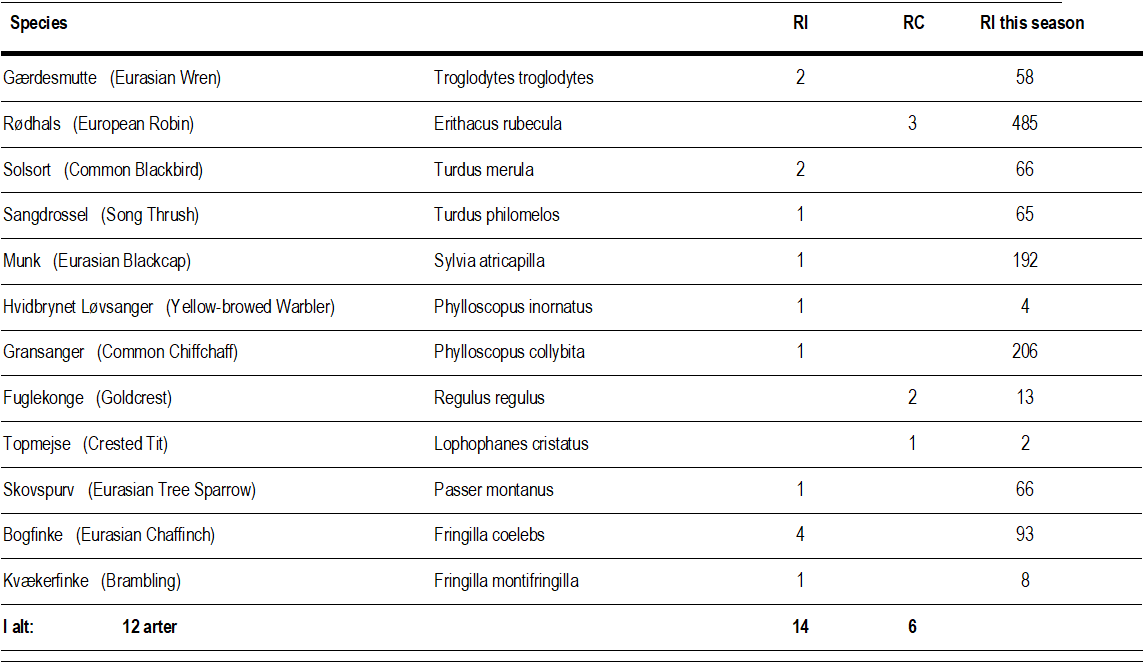
Observation: Today was a remarkably unremarkable day at obs. The wind was kind of pitifully bad, with 9 meters per second from south-southwest, which is kind of useless at this time of year. And as expected, the obs was mostly a nothingburger.
The usual suspects: Common Scoters (Melanitta nigra), Red-throated Loons (Gavia stelatta), and Meadow Pipits (Anthus pratensis) were few, with respectively 253, 28, and 52 flying by. And besides the one Nutcracker (Nucifraga caryocatactes) visiting us at obs, all the other numbers were pretty pathetic, and honestly… I really don’t want to talk about obs anymore.
In pure desperation for birds, a couple of friends and I went bushwhacking for something (anything!). And after 5 hours of intense birding, we only managed a couple of Yellow-browed Warblers (Phylloscopus inornatus), a single regular Lesser Whitethroat (Curruca curruca) (unluckily not a Blythi or Halimodendri), two Red Crossbills (Loxia curvirostra), and 7 (!) Grey Partridges (Perdix perdix). Not really the hidden treasures we had hoped for, but a decent way to make up for the pathetic obs.
Other things: In the evening, Bent, the old station leader of Blåvand, came by to deliver a talk on bird migration including some history of bird ringing and bird station. We enjoyed hearing his stories and learning about the crazy journeys some birds take on migration.
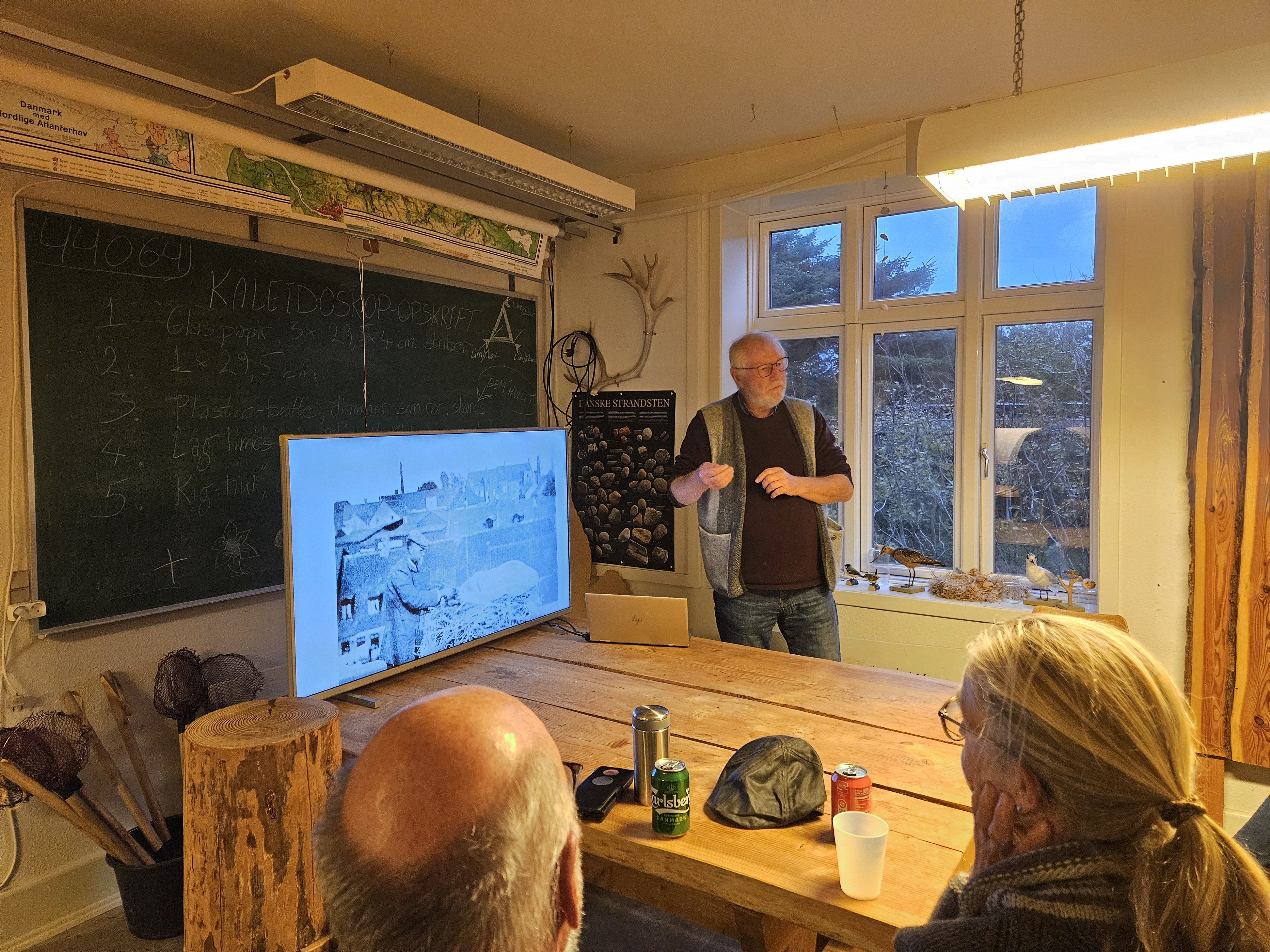
Bent giving a talk on bird migration and how it is being monitored.
At the station: Strummer Edwards, Anton Ræbild Jensen, Johan Them Steffensen, Storm Hauris Borum
Even stronger winds to fight
onsdag 14. oktober 2026
Ringing: It was too windy today to start standardized ringing, but late in the morning they opened some nets, and I came by with my family for a bit to show them a few birds. They were most excited to see the Yellow-browed Warbler (Hvidbrynet Løvsanger) and the Firecrest (Rødtoppet Fuglekonge). Since my mom has an x-license, she was also able to practice her handling under my wings, which was nice.
Today's numbers:
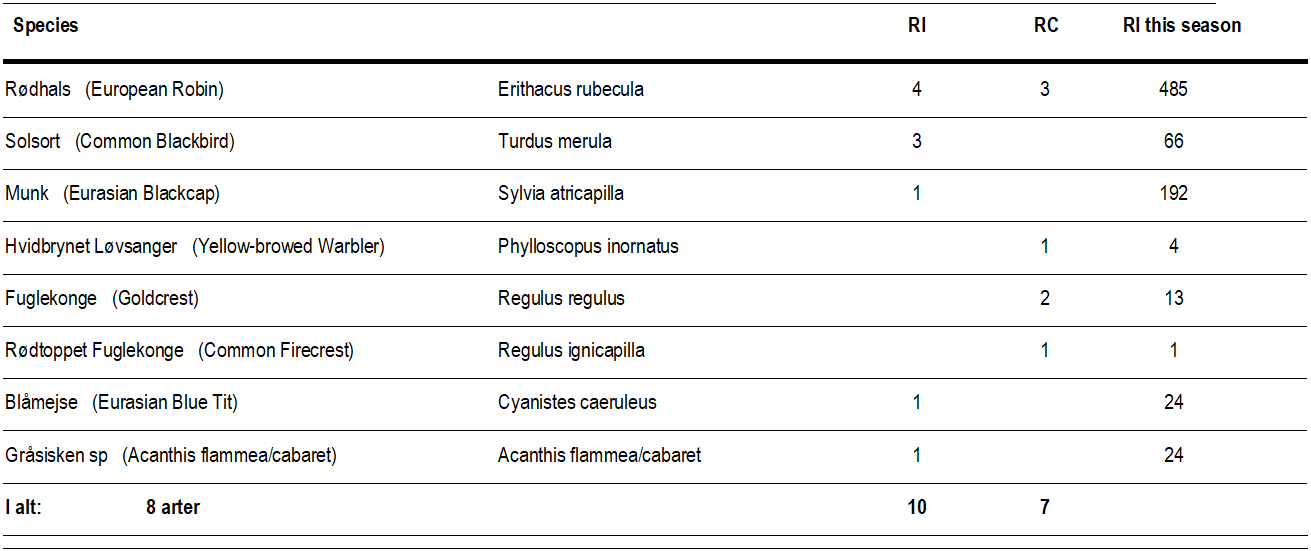
Observation: Today looked great for a good sea watch, with good wind blowing up from Orkney towards Blåvand. The excitement for possible Storm Petrels and Shearwaters was high at the station, but my (Anton) disposition was slightly different. The thing is… I have been here before. I have already had several days where the wind from the northwest looked good, but almost every single time only a single Sooty Shearwater (Ardenna grisea) would be seen at obs. I was certain that today would be just more of the same. However, Andreas (one of the more experienced station guys) said that today could be good, and that I should get up very early to get a space in the Sabines bunker.
So, I got up at an early 04.30, got ready, and walked the kilometre and a half (or so) in the dark up the beach in heavy headwinds to find my place in the bunker. Luckily, only a few had the hardcore birder drive to get up that early that I had… or they just knew it was not worth it to go to the bunker today (something I would only realise around noon).
The first birds spotted at obs (about two hours after I got to the Sabines bunker) were two Kittiwakes (Rissa tridactyla) flying by together with a Common Gull (Larus canus). The gulls would prove to be one of the more prominent groups today, with a total of 410 Common Gulls, an additional Kittiwake, 21 Black-headed Gulls (Chroicocephalus ridibundus), two Caspian Gulls (Larus cachinnans), and a whopping 25 Little Gulls (Hydrocoloeus minitus). Especially the Little Gulls were a highlight of today, as they came from both far out and extremely close to the beach.
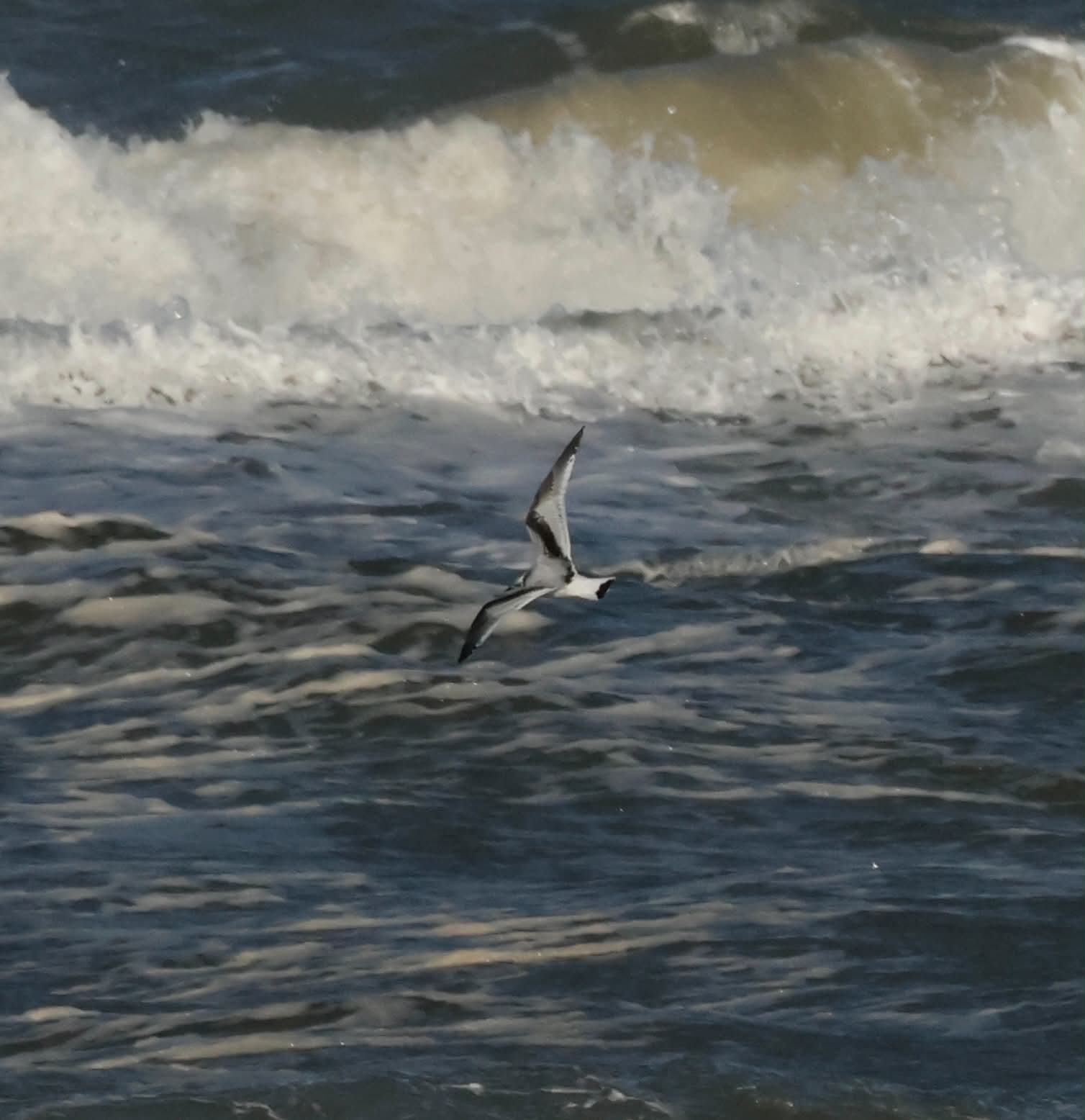
One of the close-flying Little Gulls. Credit Anton Møbjerg Toft.
Numbers were also good for the other seabirds, with about 800 Common Scoters (Melanitta nigra), 7 Velvet Scoters (Melanitta fusca), 206 Red-throated Loons (Gavia Stelatta), 80 Razorbills/Common Murres (Alca torda/Uria aalge), and 2 Parasitic Skuas (Stercorarius parasiticus) - all pretty good numbers!
The highlight species of today (as I predicted) was a single Sooty Shearwater. It came by very fast, but flew relatively close for a Shearwater. The others at obs were incredibly hyped for the bird, but I have seen enough during this season. Still a pretty decent species, of course, but not enough to move me. The bird that would have moved me luckily flew right by the Sabine bunker. What was unlucky was that I wasn’t in the bunker when it happened.
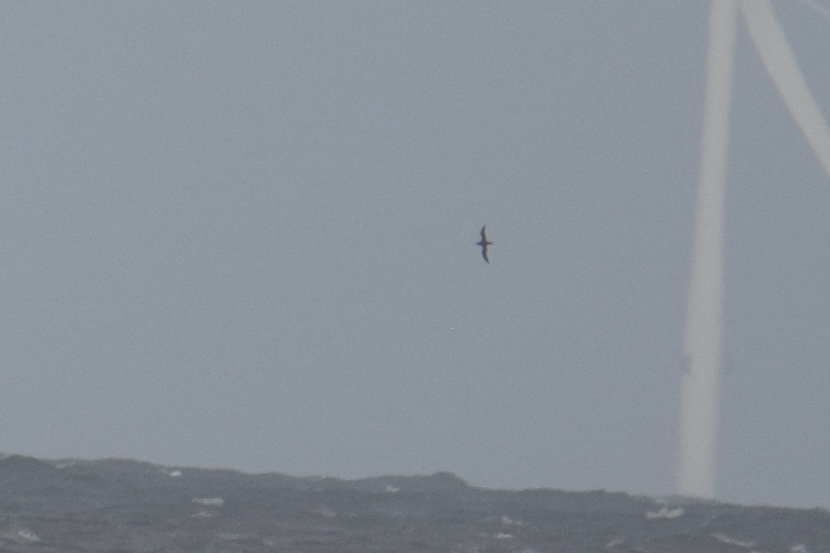
The Shearwater even came into photo-distance. Credit Alfred Godsk Geckler.
What had happened was that Anton Toft, Sverre Porsgaard (who is a former migratory observer at Blåvand Fuglestation), and I decided that we would go through the marsh on our way back from obs in hopes of maybe a rare pipit or something. Unfortunately, at the same time, at least one Sabine's Gull (Xema Sabini) was following the coast south and flew right by the bunker and the Huk while we were just a couple hundred meters inland. We, of course, missed it, while every birder from the Huk to Grønningen got it. Sabine’s Gull is one of my top bucket-list species for Blåvand, and would have been a new check for me. Guess I will just have one for myself instead…
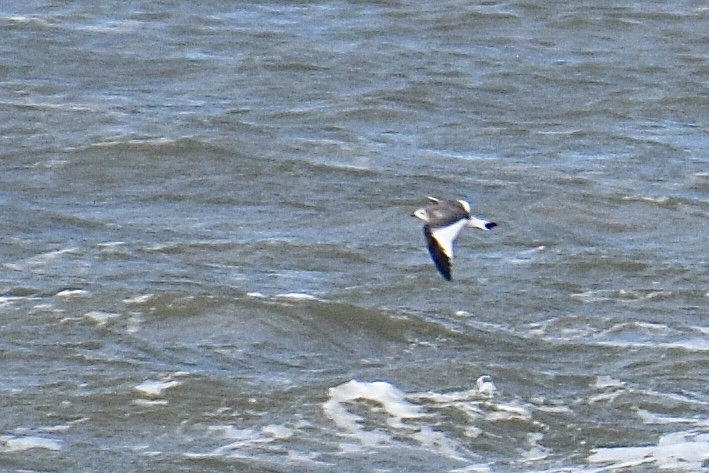
One of the Sabine's Gulls I managed to miss. Credit Anton Møbjerg Toft.
At the Station: Strummer Edwards, Anton Ræbild Jensen, Johan Them Steffensen & Storm Borum
Fighting through the winds
tirsdag 13. oktober 2026
Ringing:
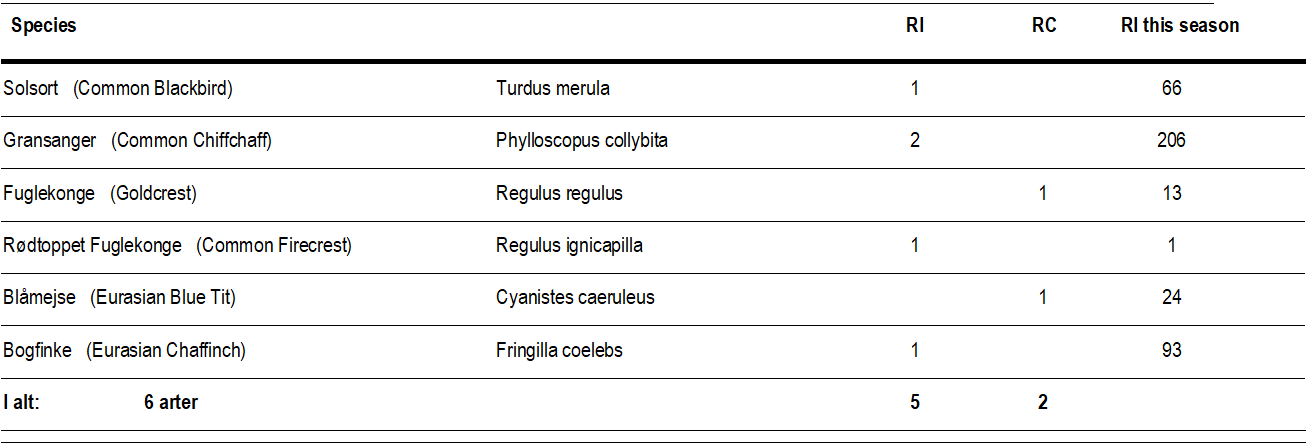
Not the best weather for Open House today, but they were able to show a few birds to the visitors, and one of them was the first Firecrest (Rødtoppet Fuglekonge) of the season!
Today's numbers:
Observations:
A day of strong, but not quite strong enough winds. I (Johan), joined Anton today as ringing in strong winds can be quite impossible. I was rewarded with some easy migration, that I can enjoy from the lone fact that it is slightly different from my month as observer. We have started to observe Brent geese (Branta bernicla) and, I like to think just for me, Common Eider (Somateria mollissima). Other than these nice species, we had some eventful 30 seconds, when a Sooty Shearwater (Ardenna grisea) and Pallid harrier (Circus macrourus) appeared at the same time, for some in the same scope field. This was 2 new species for a lot of the young birders frequenting the area these days, so we could feel the stress from the group. We had our own little spot, but their hill looked quite chaotic.
Tomorrow is another day of strong winds, so we're hoping to get some shearwaters and maybe even some storm petrels through the area. Blåvand is packed with enough birders to wring them out if possible.
At the station: Strummer Edwards, Anton Ræbild Jensen, Johan Them Steffensen, Storm Hauris Borum
A Corvid in the Hand is Worth Less than 800 in the Sky
mandag 12. oktober 2026
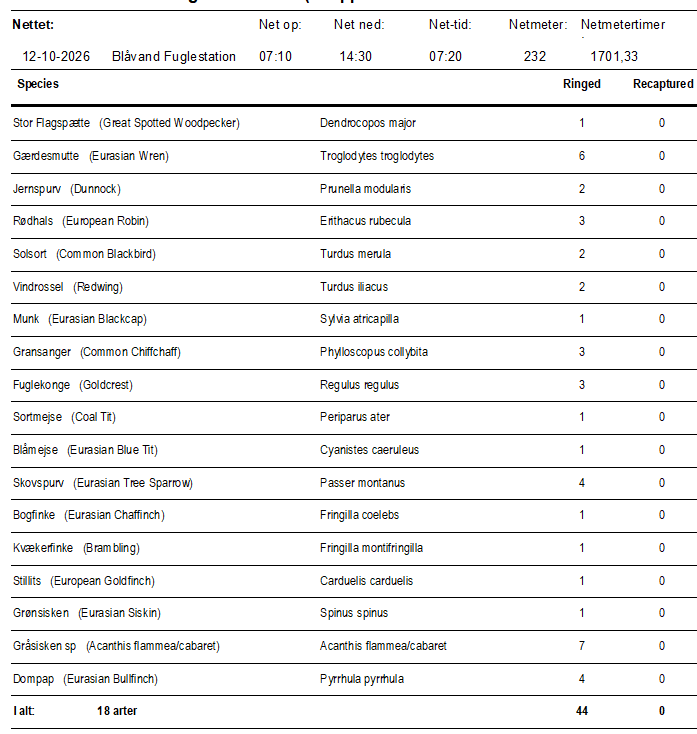
Ringing: A good day of ringing at the station with a total of 44 birds! It was a great mix of species, including some of the first redwings (Turdus iliacus) and goldcrests (Regulus regulus) of this season. After returning to the station, I (Storm) was happy to see some of these species that were not here just a week ago! It is great to see how much things can change as we are entering peak thrush migration.
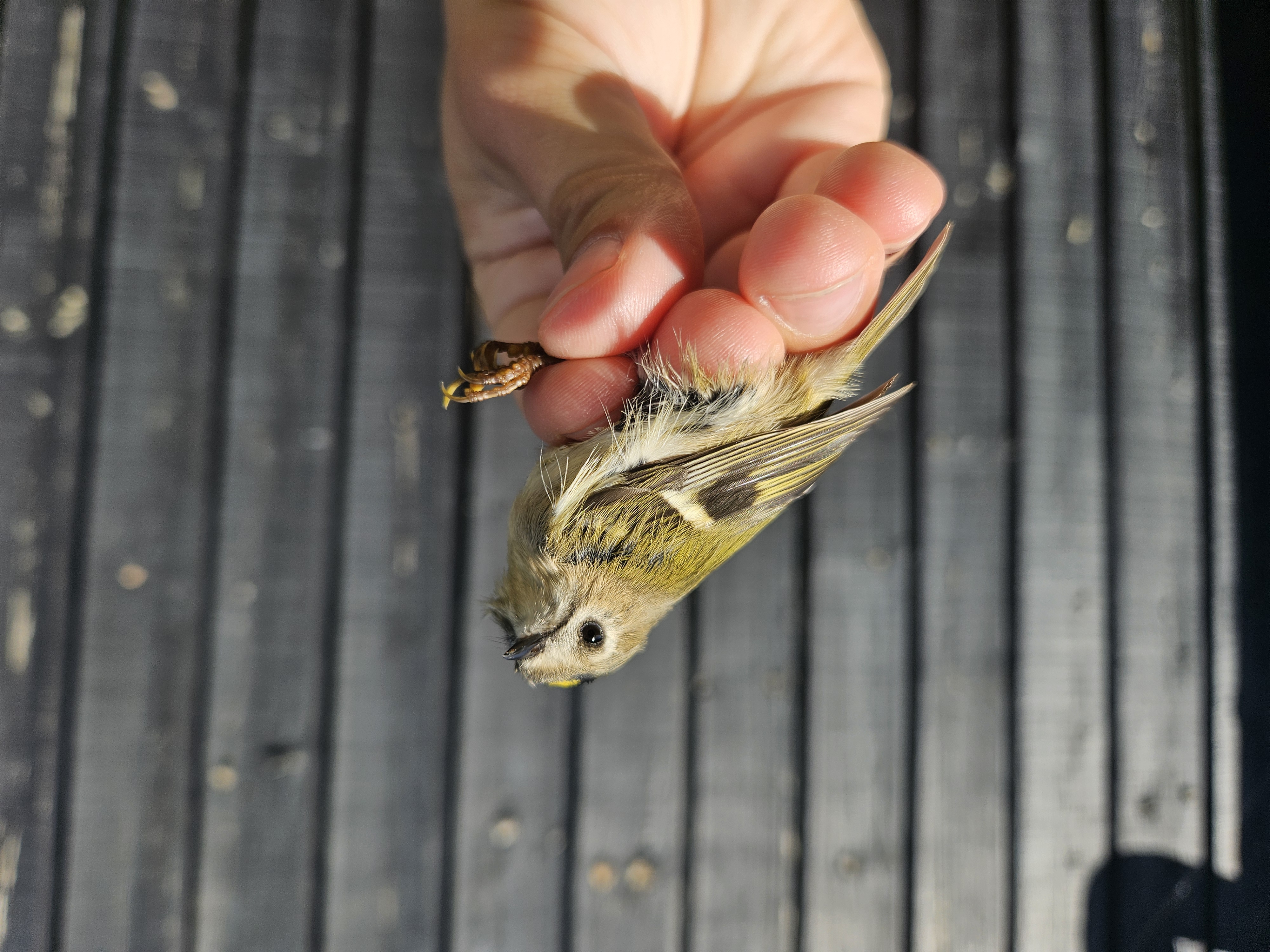
Goldcrests are starting to show up now, a true late autumn migrant!
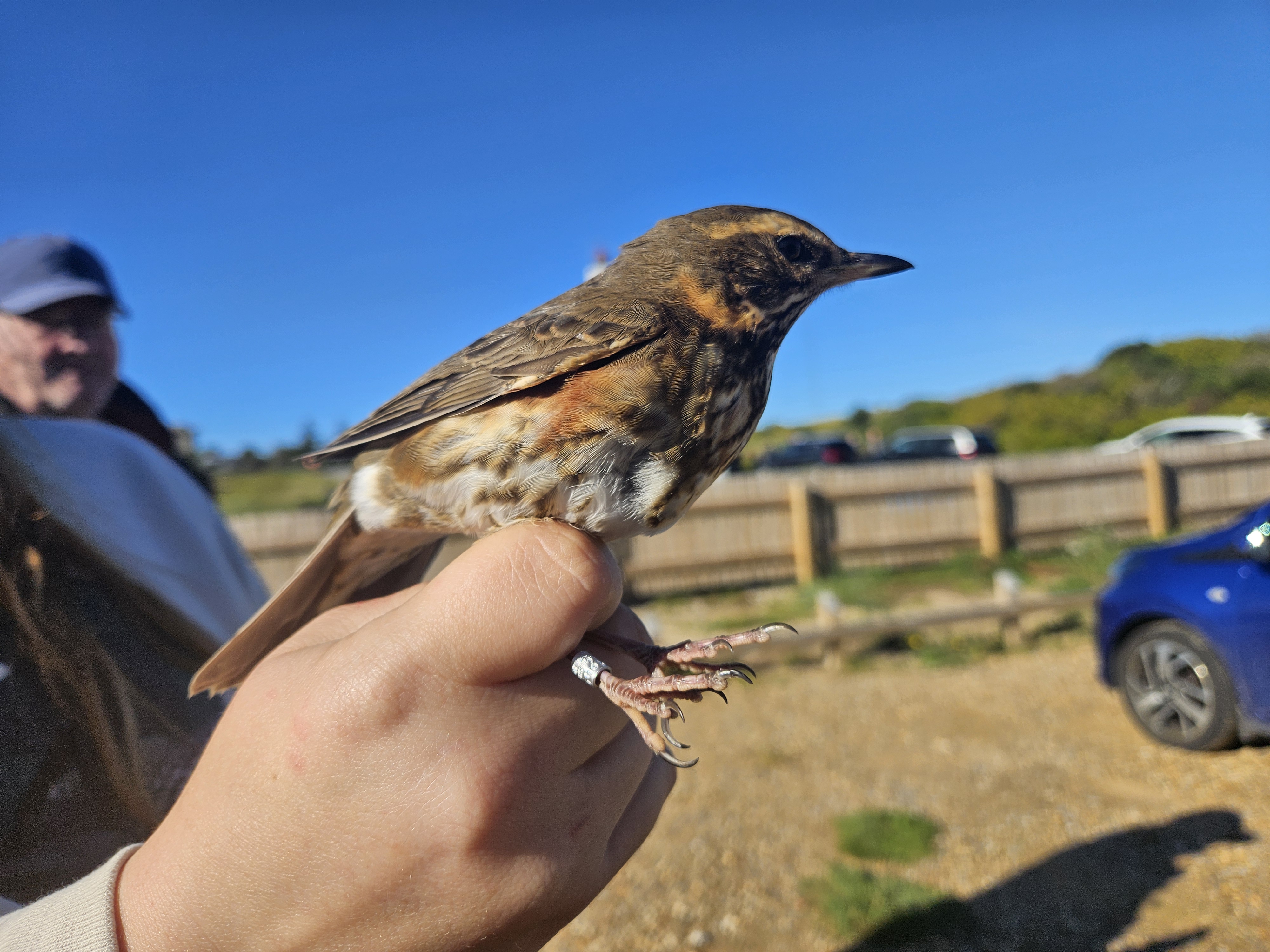
Thrushes such as this beautiful redwing are also starting to show up in greater numbers.
At 11 we were joined by the mayor of Varde kommune, Sarah Andersen, who went on a walk with us around the garden to see the ringing process. While the station garden was sadly empty, the lighthouse garden produced not only a beautiful brambling (Fringilla montifringilla), and a blackcap (Sylvia atricappilla) halfway through moulting into its adult cap, but also a great spotted woodpecker (Dendrocopos major). This was a great showcase of the great species we get at Blåvand, and also of the dedication of the volunteers, as Strummer calmly ringed the woodpecker while being pecked! The mayor was not afraid of holding the the birds and got the chance to release them.
Todays numbers:
Observation: Today was an awesome day at obs! The forecast said clear skies with a mild wind from southwest (always a recipe for a good day at obs), and with the temps dropping all the way down to 3 degrees celsius, I (Anton) expected that some birds might have been reminded, that winter is coming (cue the GoT intro theme).
And like clockwork, at 0745 in the morning, when obs started today, a flock of almost 200 Starling (Sturnus vulgaris) flew right overhead - I knew that today was going to be a good day for numbers…
And while we didn’t manage the staggering 11.000 finches from earlier in the season, we did manage to get an impressive 1650 Starlings, and a whopping 800 Jackdaws (Coloeus monedula) and Rooks (Corvus frugilegus) at obs. Furthermore, we also produced a good 17 Grey Wagtails (Motacilla cinerea), which are one of my favourites at obs. And as for the other passerines, we saw 238 Meadow Pipits (Anthus pratensis), 341 Chaffinces/Bramblings (Fringilla coelebs/F. montifringilla), and a single Red Crossbill (Luxia curvirostra). We were also lucky enough to have a resting Great Grey Shrike (Lanius excubitor) at obs, as well as a hunting Peregrine Falcon (Falco peregrinus).
Today was also a decent day for Common Eiders (Somateria mollissima), of which we had a pretty good 273, along with a single Black-throated Loon (Gavia arctica) - always a great addition to a good obs.
Other Things: Today is Storms first day back after his graduation in Bruxelles. We are so very glad to have him back at the station, not only for the manpower, but also for his great disposition. Hopefully we can get some good birds in his hands to make up for the lost time.
At the Station: Strummer Edwards, Anton Ræbild Jensen, Johan Them Steffensen & Storm Borum