
Her på Blåvand's blog bringes korte nyheder i dagbogsformat om livet og hændelser på fuglestationen.
-
FORSIDE

- Blog
That's a wrap on September
onsdag 30. september 2026
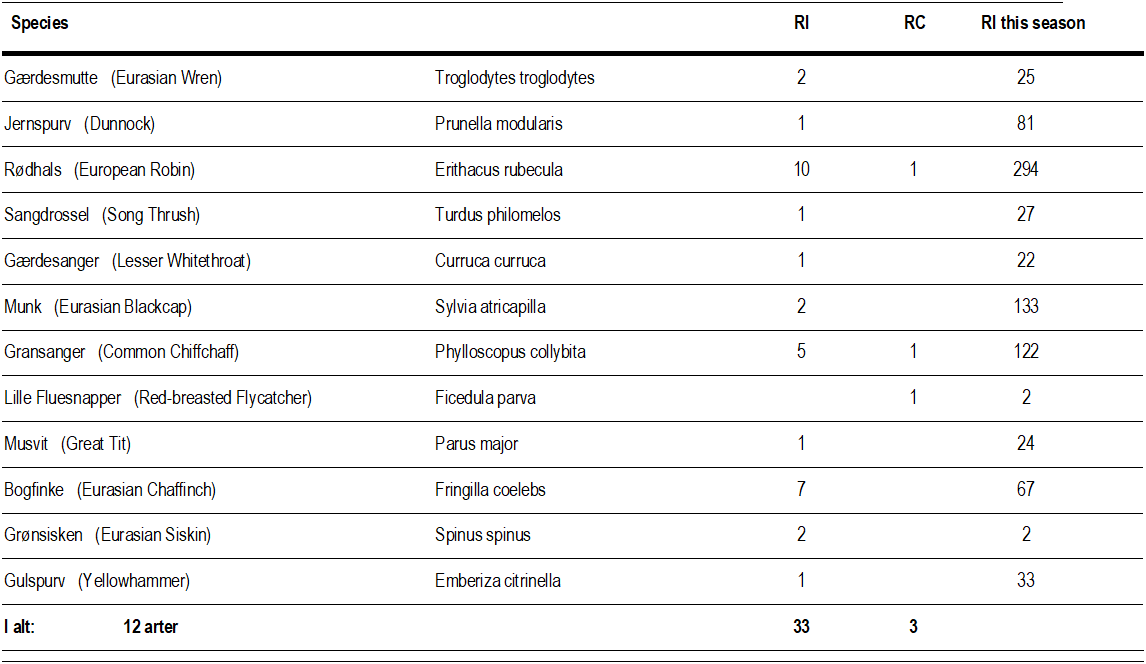
Ringing: Another day of ringing brought 36 birds of 12 different species. Most notable mentions were the Red-breasted Flycatcher (Lille Fluesnapper) from yesterday, that came back for a little recap. Other than that, I had a cute couple of Siskins (Grønsisken), a male and a female (forgot to photograph the female though).
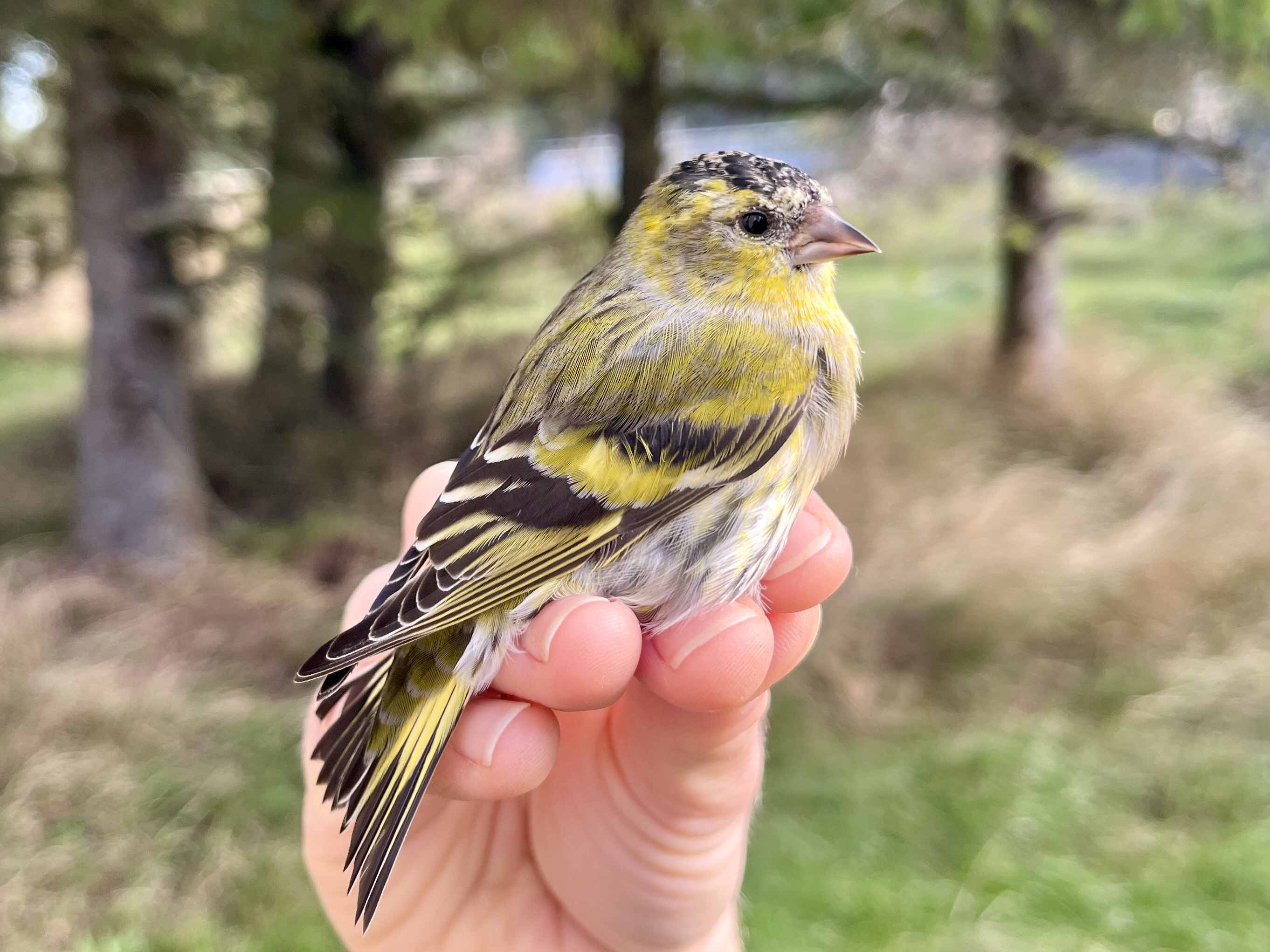 A young male Siskin, aged from some lighter / duller wing feathers in the feather group called greater coverts, and sexed from the extend of greenish yellow and the black crown feathers.
Last day of September means we can now see the cumulated monthly numbers as well. This month we managed to ring a total of 821 birds of 34 species!
- The most prevalent species was, to noone's surprise, the Robin (Rødhals) with 271 individuals, the Blackcap (Munk) with exactly 100 individuals, and the Chiffchaff (Gransanger) with 90 individuals.
- The one of a kind species have been the Tree Pipit (Skovpiber), Meadow Pipit (Engpiber), Yellow-browed Warbler (Hvidbrynet Løvsanger), Wheatear (Stenpikker), Eurasion Jay (Skovskade), House Sparrow (Gråspurv) and Reed Bunting (Rørspurv). More honorable mentions are the Ringed Plover (Stor Præstekrave) and the Red-breasted Flycatcher of which we've caught two of each.
This month we've also handled 87 recaptures of 20 species. 30 of the recaptures were Robins.
Today's numbers:
Observations: Nice clear skies greeted us on the dunes today and we were shortly treated to a lovely sunrise over the heath. However, there was little time to enjoy the view as I was glued to the scope for the first hour, counting common scoters (Melanitta nigra) migrating past in a steady flow. The peak is always in the first hours or so after sunrise, and already within that time I had counted 800.
We had a nice day for geese compared to the last couple days, with flocks og brant (Branta bernicla), barnacle geese (Branta leucopsis), and greylag geese (Anser anser). We are expecting a higher count of migrating geese throughout October, and hopefully a nice representation of species as well.
Raptor numbers were good today, at least by Blåvand standards. This is not a great place to watch migrating raptors compared to migrating sea-birds, but we still had two hen harries (Circus cyanistes), three red kites (Milvus milvus), and three white-tailed eagles (Haliaeetus albicilla), as well as a very close-flying sparrowhawk (Accipiter nisus).
While checking his photos from today, Anton discovered a surprise horned lark (Eremophila alpestris) amongst his photos of other small birds (mostly finches). Although the quality is not the best, some key characteristics are still visible: black moustacial stripe down the cheek, a white supercilium (eyebrow) and pale chin. It would have been a lifer for me, if only we had noticed when it was actually there. However, I still got a lark lifer today, when I heard a wood lark (Lullula arborea) sing for the first time!
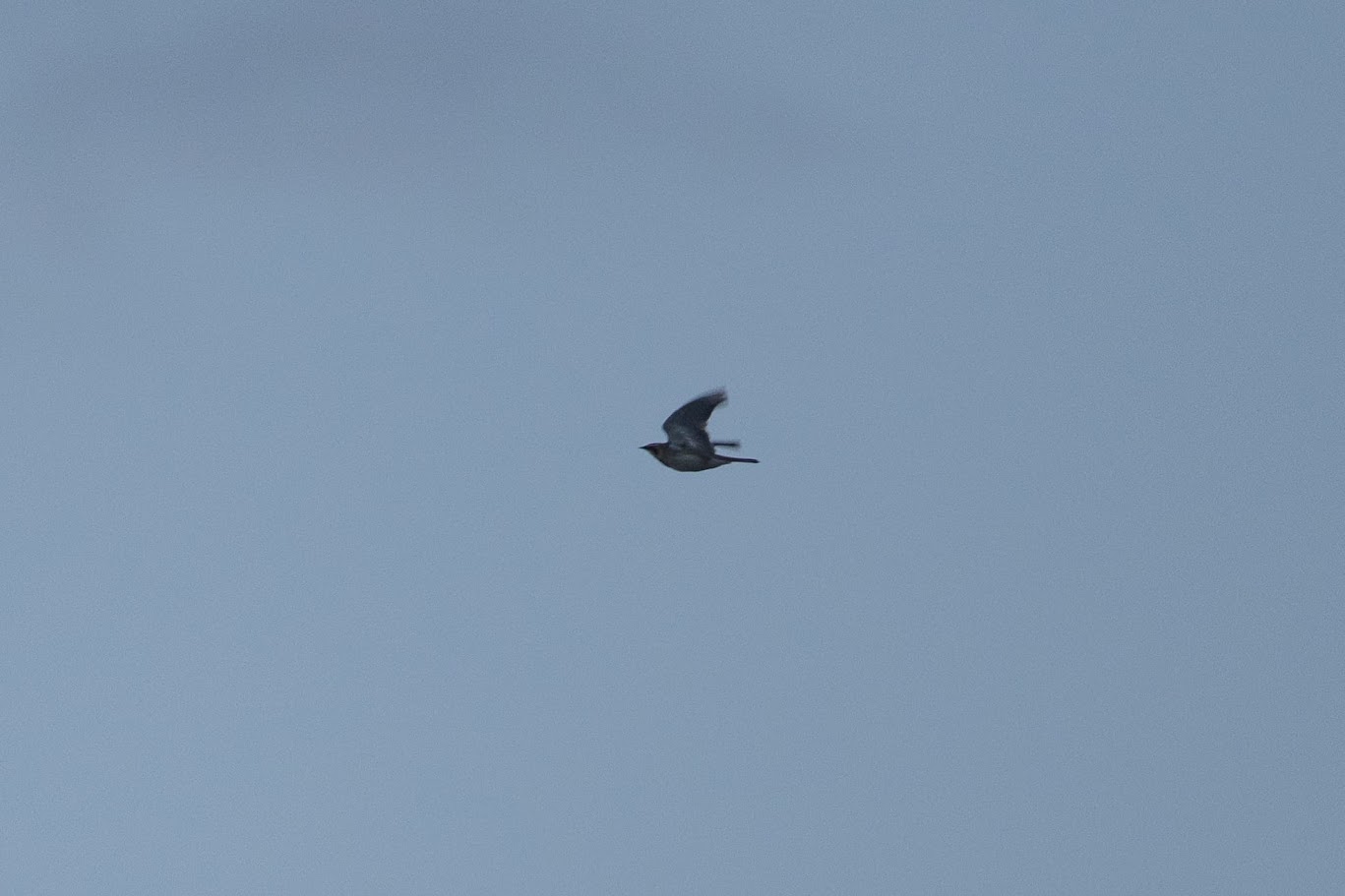 Surprise horned lark discovered amongst the small bird photos from today. Photo by Anton Ræbild Jensen.
At the station: Strummer Edwards, Mathilde Sif Eiby, Anton Ræbild Jensen, Storm Hauris Borum and Johan Them Steffensen